




Board and Batten Siding: 4 Styles, Materials & Curb Appeal
Board and batten siding is one of the most visually striking exterior finishes available for residential homes, combining a distinctive vertical pattern of wide boards and narrow battens to create depth, texture, and architectural interest. Once found almost exclusively on rural barns and farmhouses, board and batten siding has become one of the most requested exterior styles among homeowners who want to add curb appeal, distinguish their home from cookie-cutter neighbors, and increase resale value with an upgrade that reads as premium.
In this guide, you will learn:
- What board and batten siding actually is: How the pattern works and the history that drives its enduring appeal.
- The 4 popular styles homeowners choose: A clear breakdown of traditional, reverse, board-on-board, and modern variations.
- The best materials and curb appeal benefits: How to choose the right product for your home and what to expect for return on investment.
Understanding Board and Batten Siding

Board and batten siding is a vertical siding pattern that uses wide boards laid flat against the wall with narrow strips (called battens) covering the seams between the boards. Understanding the pattern and its origins helps homeowners see why this style has held its appeal for over a century.
Defining Board and Batten Siding
Board and batten siding is a vertical exterior wall covering that alternates between wider boards (typically 6 to 12 inches wide) and narrower battens (typically 1 to 3 inches wide) installed over the seams between the boards. The pattern creates a distinctive shadow line down the wall that adds depth and dimension impossible to achieve with flat horizontal siding. Board and batten can be installed floor to ceiling, on gable ends only, or as an accent wall on portions of the home, giving homeowners significant flexibility in how they use the style. Modern board and batten siding products come in wood, engineered wood, fiber cement, vinyl, and metal.
- Vertical orientation: Boards and battens run from ground level to the roof line in continuous vertical lines.
- Two-part pattern: Wide boards form the base surface, narrow battens cover the seams between them.
- Distinctive shadow lines: The raised battens create depth and texture across the wall surface.
- Flexible application: Can cover the entire home or serve as an accent on gables and select walls.
The History of Board and Batten Siding
Board and batten siding originated in early American agricultural buildings, where farmers used the pattern on barns, sheds, and outbuildings because it efficiently used wide rough-cut boards and covered the seams that would otherwise let in weather. The style spread to farmhouses, then to Gothic Revival homes in the mid-1800s where architects embraced the vertical lines for their distinctive appearance. Board and batten faded from mainstream residential use during the 20th century as horizontal lap siding dominated, but the style has returned in recent decades as homeowners seek exteriors that stand apart from generic new construction. Modern farmhouse architecture has driven much of the recent revival.
- Barn origins: First used on American agricultural buildings to seal seams between wide boards.
- Gothic Revival: Adopted in the 1800s for residential architecture featuring strong vertical lines.
- 20th-century decline: Lost mainstream popularity as horizontal lap siding took over.
- Modern revival: Returned to prominence with the modern farmhouse and contemporary rustic styles.
4 Popular Styles of Board and Batten Siding
The 4 most popular styles of board and batten siding are traditional, reverse, board on board, and modern or contemporary variations. Each style creates a slightly different visual effect and works best on specific home architectures.
1. Traditional Board and Batten
Traditional board and batten features wide flat boards installed vertically against the wall with narrow battens covering every seam between adjacent boards. This is the classic pattern seen on historic barns and farmhouses, and it remains the most popular style choice for homeowners today. Board widths typically range from 8 to 12 inches with battens 1 to 3 inches wide, creating a strong vertical rhythm across the wall. Traditional board and batten works well on farmhouses, cottages, Craftsman homes, and any architecture where a hand-built rural aesthetic fits the design vision.
- Classic pattern: Wide flat boards with narrow battens covering the seams.
- Board dimensions: Typically 8 to 12 inches wide with 1 to 3 inch battens.
- Best applications: Farmhouses, cottages, Craftsman homes, and modern farmhouse designs.
- Timeless appeal: The original pattern that has defined the style for over 150 years.
2. Reverse Board and Batten
Reverse board and batten flips the traditional pattern by placing the narrow battens beneath the wider boards rather than on top of them. The result creates recessed shadow lines instead of raised ones, giving the wall a more subtle, refined appearance while retaining the strong vertical rhythm. Reverse board and batten works well on contemporary homes where the raised traditional battens would feel too rustic, and on modern farmhouses that want the style influence without the fully rural aesthetic. The pattern also holds up better in high-wind areas because the raised elements sit flush with the wall surface.
- Inverted pattern: Battens sit beneath the boards rather than on top.
- Recessed shadow lines: Creates depth without the raised element of traditional style.
- Contemporary appeal: Works well on modern homes and refined farmhouse designs.
- Wind performance: Flush surface performs slightly better in high-wind conditions.
3. Board on Board
Board on board siding uses two overlapping boards of similar width rather than a board-and-narrow-batten combination, creating a bolder pattern with more visual weight. The overlapping boards create wider shadow lines and a more substantial appearance than traditional board and batten, making board on board a strong choice for larger homes where thinner battens might get lost visually. Board on board also uses roughly the same amount of material as traditional board and batten but creates a completely different scale and rhythm. The style works particularly well on modern rustic and mountain home architectures.
- Overlapping design: Two boards of similar width overlap to cover seams.
- Bolder appearance: Wider shadow lines create more visual weight than traditional style.
- Large-home appeal: Substantial pattern reads well on large-scale homes.
- Rustic aesthetic: Works particularly well on mountain and rustic contemporary architectures.
4. Modern and Contemporary Board and Batten
Modern and contemporary board and batten adapts the traditional pattern with clean lines, wider or narrower spacing, and materials like metal or fiber cement to fit contemporary architecture. Some modern variations use flush boards without visible battens, relying instead on precise reveal gaps between boards to create the vertical rhythm. Others use exaggerated batten sizes to create statement walls that anchor the home’s design. Modern board and batten works best on contemporary homes, transitional architectures, and any home where the designer wants vertical texture without the rural connotations of traditional patterns.
- Clean-lined variations: Adapts the pattern for contemporary and transitional architectures.
- Flush board options: Some modern styles skip visible battens entirely.
- Exaggerated proportions: Wider or narrower spacing creates distinctive design statements.
- Material flexibility: Metal and fiber cement give the style a modern feel.
Board and Batten Siding Materials
Board and batten siding is available in wood, engineered wood, fiber cement, vinyl, and metal, with each material offering a different balance of cost, lifespan, maintenance, and appearance. Choosing the right material is often more important than choosing the right style pattern.
Top Materials for Board and Batten Siding
The best materials for board and batten siding depend on budget, climate, and long-term maintenance preferences, but fiber cement has emerged as the most popular premium option due to its exceptional durability and strong return on investment. According to the Remodeling Cost vs. Value Report, an annual industry benchmark tracking home improvement ROI, fiber cement siding replacement consistently ranks among the top 10 highest-return home improvements year after year, recouping between 77 and 88 percent of project cost at resale in most markets. Engineered wood offers a similar aesthetic at lower cost, while vinyl provides the most affordable option for budget-conscious homeowners.
- Fiber cement: Premium option with 50+ year lifespan and highest ROI ranking.
- Engineered wood: Attractive middle-ground offering wood appearance at lower cost.
- Natural wood: Authentic look with higher maintenance requirements and shorter lifespan.
- Vinyl: Most affordable option with lowest maintenance requirements.
- Metal: Contemporary look with excellent durability and fire resistance.
Material Lifespan and Maintenance Compared
The materials commonly used for board and batten siding differ significantly on lifespan and maintenance requirements, which affects long-term cost of ownership. Fiber cement lasts 50 years or more with minimal maintenance beyond periodic repainting every 10 to 15 years. Engineered wood delivers 30 to 40 years of service with modest maintenance needs. Natural wood requires the most maintenance, with regular staining or painting every 3 to 7 years to prevent rot, but delivers an authentic aesthetic that no other material can match. Vinyl needs almost no maintenance but has the shortest lifespan and can look less premium than the alternatives.
- Fiber cement lifespan: 50 to 100 years with periodic repainting every 10 to 15 years.
- Engineered wood: 30 to 40 years with modest maintenance and periodic finishing.
- Natural wood: 20 to 40 years, but requires regular staining or painting every 3 to 7 years.
- Vinyl: 20 to 40 years with essentially no maintenance beyond periodic washing.
Board and Batten Curb Appeal Benefits
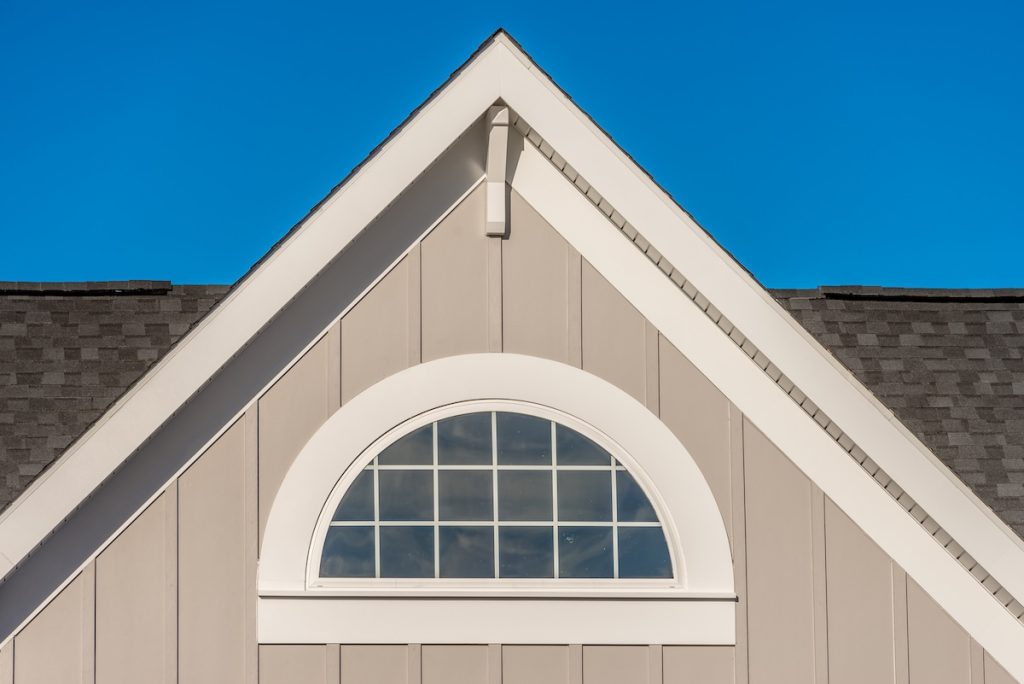
Board and batten siding delivers exceptional curb appeal benefits that directly translate to higher home resale value and faster sale times. Understanding why the style makes such an impact helps homeowners evaluate whether the upgrade is right for their home.
The Curb Appeal Impact of Board and Batten
Board and batten siding boosts curb appeal by creating strong vertical lines that make homes look taller, more substantial, and more architecturally distinct than they would with standard horizontal siding. The shadow lines from the battens add depth and texture that flat siding cannot match, giving the home a hand-crafted quality even when installed from modern manufactured materials. Real estate professionals consistently report that homes with board and batten siding, especially as accent walls on gables or entries, generate more buyer interest and command higher offers in competitive markets.
- Vertical emphasis: Strong vertical lines make homes look taller and more substantial.
- Shadow depth: The battens create texture and depth that flat siding cannot match.
- Architectural interest: Adds visual complexity that reads as premium construction.
- Buyer appeal: Homes with board and batten typically sell faster and for more money.
Home Styles Best Suited for Board and Batten
Board and batten siding works best on farmhouse, modern farmhouse, Craftsman, cottage, Gothic Revival, Colonial, and contemporary architectures where vertical lines fit the design vision. The style is particularly popular on modern farmhouse homes, which have dominated new construction and remodeling trends over the past decade. Board and batten can also add interest to more traditional homes when used as an accent on gables, entry areas, or specific walls rather than covering the entire exterior. Ranch homes and mid-century modern designs are generally poor matches for board and batten because the vertical emphasis conflicts with the low horizontal lines of those styles.
- Modern farmhouse: The single strongest match for board and batten siding.
- Traditional farmhouse: The style’s original architectural home.
- Craftsman and cottage: Works well on both full-exterior and accent applications.
- Colonial and Gothic Revival: Historically appropriate applications on older architectures.
- Poor matches: Ranch and mid-century modern designs where horizontal lines dominate.
Frequently Asked Questions About Board and Batten Siding
How Much Does Board and Batten Siding Cost?
Board and batten siding costs $4 to $18 per square foot installed depending on material, with fiber cement running $7 to $13 per square foot, engineered wood at $4 to $9, natural cedar at $6 to $14, and vinyl at $3 to $8. A typical 2,000 square foot home costs $8,000 to $36,000 for full board and batten installation. Accent applications on gables or entry walls cost significantly less and deliver strong visual impact for a lower budget.
Is Board and Batten Siding More Expensive Than Regular Siding?
Board and batten siding typically costs 10 to 20 percent more than standard horizontal lap siding in the same material because it requires more precise installation and slightly more material for the batten strips. The premium is usually well worth it because board and batten delivers noticeably better curb appeal and often higher resale value than standard siding. The cost gap narrows further when compared to premium horizontal siding styles.
How Long Does Board and Batten Siding Last?
Board and batten siding lasts 20 to 100 years depending on the material, with fiber cement at 50 to 100 years, engineered wood at 30 to 40 years, natural wood at 20 to 40 years, and vinyl at 20 to 40 years. Installation quality and ongoing maintenance are as important as material choice in reaching the expected lifespan. Regular inspection and prompt repair of any damage extend service life significantly.
Can You Install Board and Batten Siding on Any House?
You can install board and batten siding on nearly any house, but it works better aesthetically on some architectures than others. Farmhouses, Craftsman homes, cottages, and contemporary designs suit the style well, while ranch and mid-century modern homes are typically poor matches. Structural considerations are minimal because board and batten siding weighs about the same as other siding materials in the same category.
Does Board and Batten Siding Increase Home Value?
Yes, board and batten siding typically increases home value by adding curb appeal, distinguishing the home from generic new construction, and pairing well with the modern farmhouse aesthetic that dominates current buyer preferences. Return on investment varies by material, with fiber cement board and batten delivering the strongest resale performance. Real estate professionals often specifically recommend board and batten accents as one of the highest-impact exterior upgrades before listing.
Trust Alpine Roofing for Expert Board and Batten Siding Installation

When it comes to board and batten siding, the difference between a striking, long-lasting installation and one that disappoints often comes down to the contractor you choose. Alpine Roofing brings years of experience installing board and batten in fiber cement, engineered wood, and other quality materials, with the craftsmanship needed to deliver crisp lines, proper flashing details, and long-term weather resistance. Whether you are planning a full-home installation, adding accent walls on gables or entries, or upgrading from aging siding to a premium look, our team will help you choose the right material and style for your home. Contact Alpine Roofing today for a free estimate and expert guidance on transforming your exterior with board and batten siding.

Happy Roof, Happy Home


