



Hail Damage Roof Repair: 8 Signs, Inspection & Next Steps
Hail damage roof problems are one of the most expensive and underdiagnosed types of storm damage homeowners face, with damage often invisible from the ground and easy to miss until water starts leaking inside. A single hailstorm can shorten a roof’s lifespan by 10 or more years, void manufacturer warranties, and trigger insurance claims that homeowners must file within strict deadlines, which is why prompt inspection after any significant hail event is essential.
In this guide, you will learn:
- The 8 most common signs of hail damage: Visible indicators that tell you your roof has been hit and needs professional attention.
- How to safely inspect for damage: Practical steps homeowners can take from the ground and when to escalate to a professional.
- The next steps after damage is found: How to file an insurance claim, choose a contractor, and protect your home long-term.
Understanding Hail Damage to Roofs
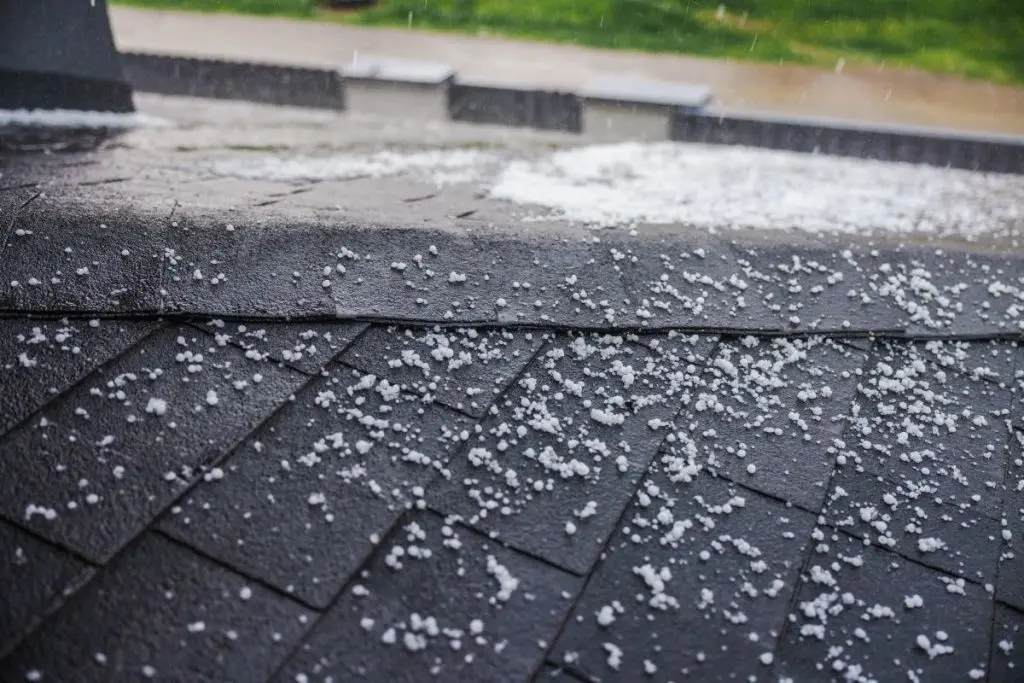
Hail damage affects roofs in ways that homeowners often cannot see from the ground, which is what makes it so dangerous and expensive over the long term. Understanding how hail damages roofing materials and what hail sizes pose real risks helps homeowners know when to take action.
How Does Hail Actually Damage a Roof?
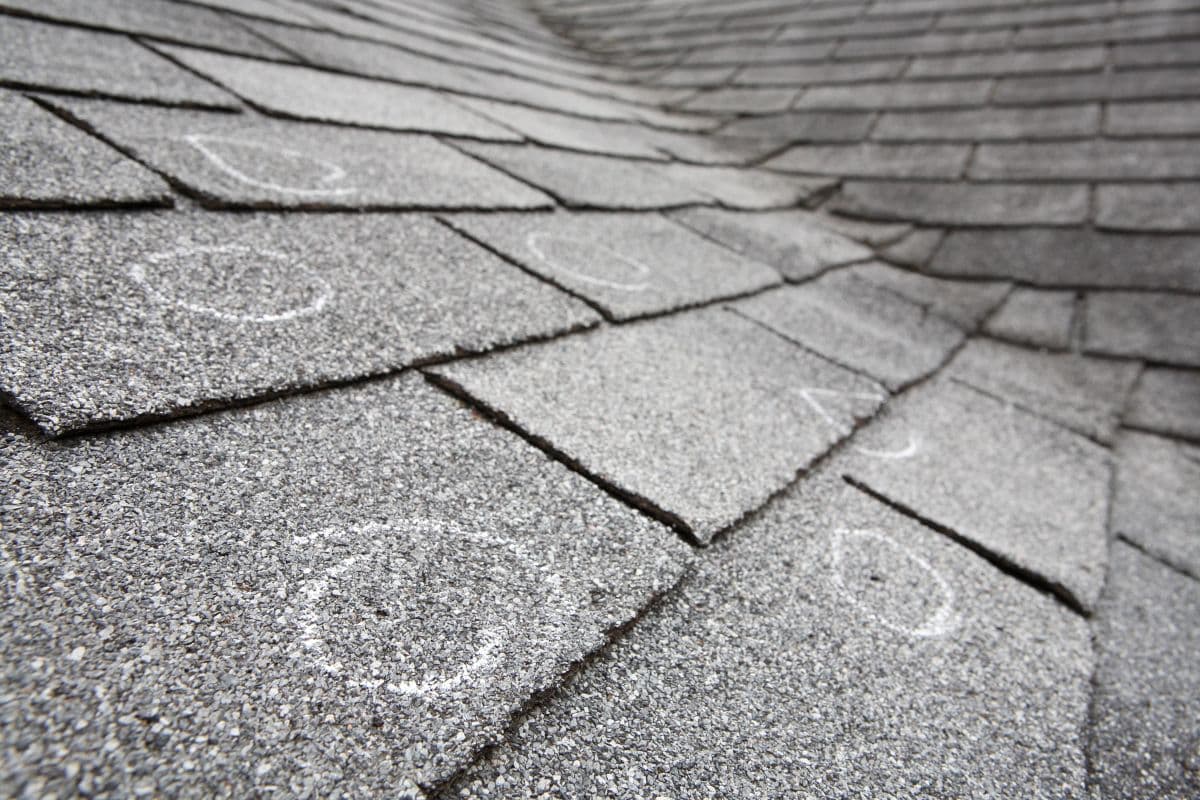
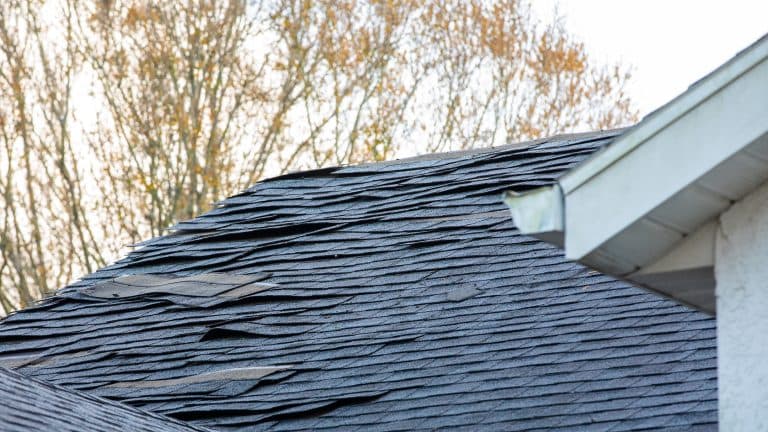
Hail damages roofs by striking the surface with enough kinetic energy to bruise, dent, crack, or tear roofing materials, depending on the size and density of the hailstone. The damage often appears as bruises that show as soft spots when pressed, cracks that run through the shingle, or granule loss that exposes the underlying asphalt to UV degradation. Even when hail damage is not immediately visible, the impact often weakens the shingle structure, accelerates aging, and shortens roof lifespan by years. The Insurance Institute for Business & Home Safety has documented three primary damage modes from hail impacts: dents and ridges (deformation), tears, and granule loss.
- Dents and ridges: Hail impact creates depressions in the shingle surface that weaken structural integrity.
- Tears and cracks: Larger hailstones can tear the shingle mat, exposing the underlying decking.
- Granule loss: Impact knocks protective mineral granules off the shingle surface, exposing asphalt to UV damage.
- Hidden damage: Many hail impacts leave no immediate visible damage but accelerate long-term failure.
What Hail Size Causes Roof Damage?
Hail damage typically begins at 1 inch in diameter (about the size of a quarter), with significant roof damage occurring at hailstones 1.25 inches and larger. According to IBHS, impact-resistant shingles are tested and rated across four classes based on the diameter of hailstones they can withstand, with Class 4 being the highest rating at 2.0 inches. Hail at 1.5 inches (golf ball size) routinely damages standard asphalt shingles, and anything 1.75 inches (golf ball to tennis ball size) or larger causes widespread damage on most roof types. Wind-driven hail at lower sizes can also cause damage by striking at unusual angles.
- 1.00 inch (quarter size): Damage possible on aging or low-quality shingles.
- 1.25 inch (Class 1 threshold): Damage common on standard asphalt shingles.
- 1.50 inch (Class 2, golf ball size): Significant damage on most non-impact-resistant materials.
- 1.75-2.00 inch (Class 3-4): Widespread damage on virtually all roof types except top-rated impact-resistant systems.
8 Signs of Hail Damage on Your Roof
The 8 most common signs of hail damage on a roof include shingle bruising, granule loss, cracked shingles, exposed mat, damaged soft metals, broken skylights, dented gutters, and interior water stains. Knowing what to look for after a storm helps homeowners catch damage early, when it is easiest and least expensive to address.
1. Dents and Bruises on Shingles
Dents and bruises on shingles are the most common sign of hail damage, often appearing as dark circular spots where the impact has knocked granules loose and bruised the underlying asphalt. These bruises are often invisible from the ground but become obvious during a close inspection, and they feel soft or spongy when pressed compared to undamaged shingle areas. Bruised shingles have compromised structural integrity even when they appear mostly intact, and they accelerate water entry and shingle aging significantly. Insurance adjusters specifically look for these bruises during hail damage inspections.
- Dark circular spots: Impact locations show as darker areas where granules have been displaced.
- Soft texture: Bruised areas feel spongy compared to undamaged shingle surfaces.
- Random pattern: Hail damage appears in random scattered patterns rather than uniform lines.
- Insurance significance: Adjusters specifically document bruises as evidence of damage.
2. Granule Loss in Gutters and Downspouts
Granule loss is one of the most visible and easily diagnosed signs of hail damage on asphalt roofs. The protective mineral granules on shingles are designed to shield the asphalt below from UV radiation, but hail impact dislodges these granules and washes them down into gutters and downspout splash zones. Heavy accumulation of granules in gutters following a storm is a strong indicator that the roof above has taken hail damage. Even moderate granule loss accelerates shingle aging and shortens roof lifespan, even when no other visible damage exists.
- Gutter inspection: Check gutters for unusual accumulations of small dark mineral granules.
- Downspout splash zones: Look at the ground beneath downspouts for granule deposits.
- Shingle bare spots: Visible bare or shiny patches on shingles indicate severe granule loss.
- Roof aging: Even moderate granule loss reduces remaining shingle life significantly.
3. Cracked or Split Shingles
Cracked or split shingles indicate severe hail damage and immediate need for repair, because cracks allow water to bypass the shingle and reach the underlayment and decking. Cracks typically run diagonally or perpendicular to the shingle edge, and they often appear after impacts from larger hailstones at 1.5 inches or greater. Some cracks are visible from the ground or a ladder, while others require an on-roof inspection. Any cracked shingle should be replaced quickly because the exposed area is no longer waterproof, even though the shingle may still appear to be in place.
- Diagonal cracks: Typical hail-related cracks run at angles across the shingle surface.
- Edge cracks: Cracks at shingle edges allow water to wick under adjacent shingles.
- Through-cracks: Cracks that penetrate the full shingle thickness compromise waterproofing entirely.
- Urgent repair: Cracked shingles need replacement before the next significant rain event.
4. Exposed Mat or Substrate
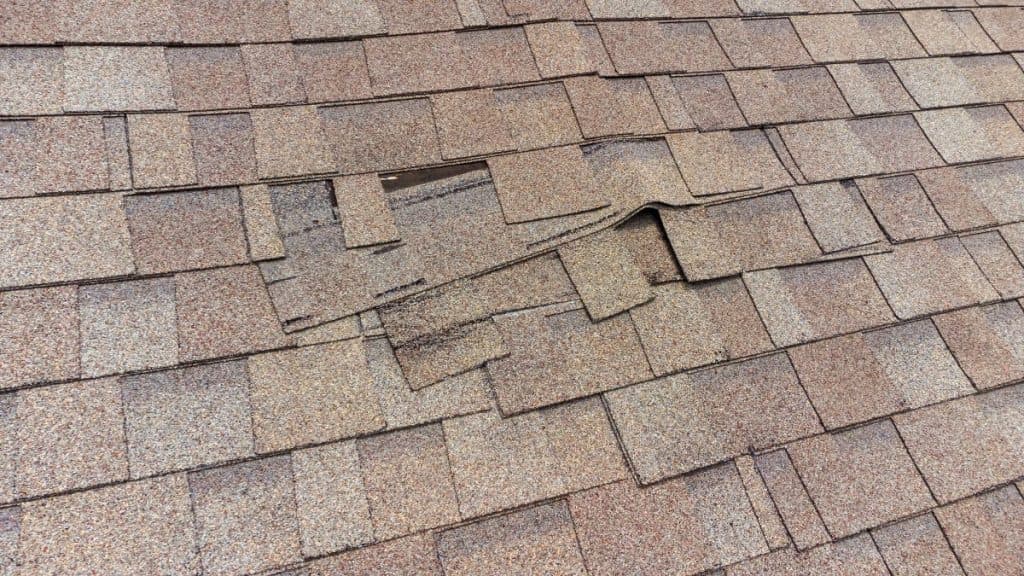
Exposed mat or substrate is one of the most severe forms of hail damage, occurring when impact tears the shingle surface deeply enough to expose the underlying fiberglass mat. This level of damage typically requires larger hail (1.75 inches and above) or weakened shingles to occur, and it indicates that the shingle has failed structurally. Exposed mat areas absorb water, lose their UV protection, and degrade rapidly, often within months of the storm. Any shingle showing exposed mat should be replaced as part of immediate post-storm repair work.
- Visible fiberglass: White or light-colored fiberglass visible through the shingle surface.
- Torn appearance: Shingle surface looks ripped or peeled rather than just dented.
- UV vulnerability: Exposed mat degrades quickly under sun exposure.
- Severe damage indicator: Multiple shingles with exposed mat often signal need for full replacement.
5. Damaged Soft Metals (Vents, Flashing, Gutters)
Soft metal components on your roof, including aluminum vents, flashing, and gutters, often show hail damage more visibly than shingles do. Dents in metal vent caps, dings in flashing, and dimples in aluminum gutters all serve as forensic evidence of hail strikes, and insurance adjusters frequently use these dents to confirm a storm hit the property. Even when shingles appear undamaged, dented metal components prove that hail of sufficient size impacted the roof and warrant closer inspection of the shingles themselves.
- Vent cap dents: Aluminum and steel vent caps show clear dents from hail impacts.
- Flashing damage: Metal flashing around chimneys and walls dents and bends under hail strikes.
- Gutter dimples: Aluminum gutters show small round dimples that match hail size.
- Adjuster evidence: Soft metal damage is often the easiest proof of a hail event.
6. Cracked or Broken Skylights
Skylights are particularly vulnerable to hail damage because their glass or plastic surfaces are exposed and often less impact-resistant than the surrounding roof. Cracked, shattered, or impact-marked skylights are obvious signs of hail damage and should be addressed quickly to prevent water intrusion. Even small impact marks that have not cracked the skylight surface can weaken the seal and lead to leaks within weeks or months. Insurance typically covers skylight replacement as part of a broader hail damage claim.
- Visible cracks: Any crack in the skylight glass or plastic indicates damage requiring replacement.
- Impact marks: Round impact marks without cracks still indicate weakened structural integrity.
- Frame damage: Bent skylight frames signal severe hail or debris impact.
- Seal compromise: Even minor damage can break the weather seal and cause future leaks.
7. Dented Gutters and Downspouts
Dented gutters and downspouts often catch hail damage first because of their exposed positioning along the eaves of the roof. Aluminum gutters show clear impact dimples after a hail event, and downspouts can be bent or dented along their length. While gutter damage alone does not always indicate roof damage, the presence of multiple gutter dents is a strong signal that significant hail hit the property and that closer roof inspection is warranted. Damaged gutters also affect water management and should be repaired or replaced as part of the storm response.
- Aluminum dimples: Small round dents in aluminum gutters indicate hail impact size.
- Downspout damage: Bent or dented downspouts can disrupt drainage performance.
- Multiple impacts: Numerous gutter dents suggest the roof took significant hail too.
- Drainage problems: Damaged gutters can cause water issues even when the roof seems fine.
8. Interior Water Stains or Leaks
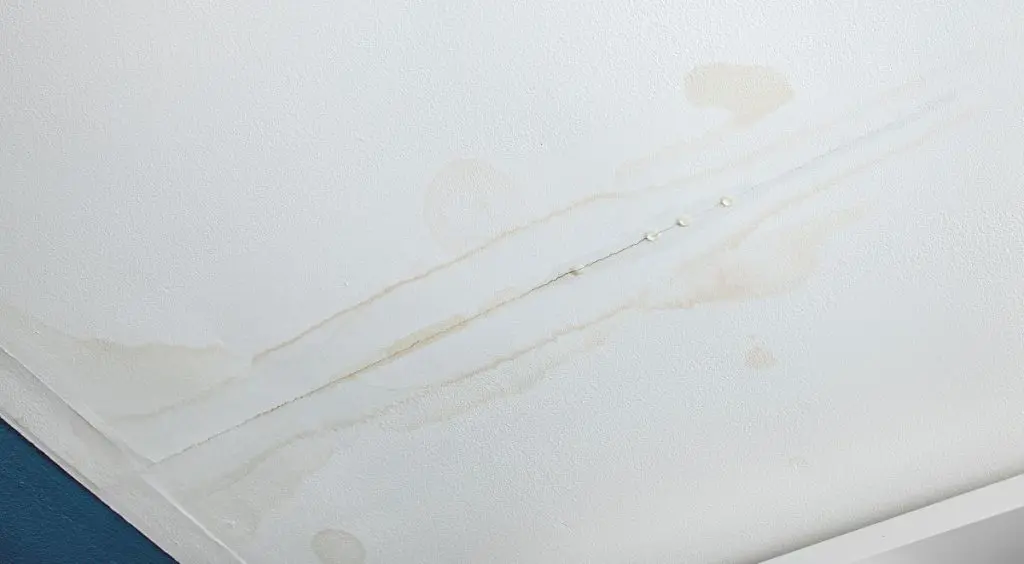
Interior water stains or active leaks appearing after a hail event indicate that damage has progressed past the visible roof surface and into the home itself. These stains often appear days or weeks after the storm as water from compromised shingles soaks through underlayment and decking before becoming visible on ceilings. Any new ceiling stain, peeling paint, or active drip after a hail event warrants immediate professional inspection, because the damage is typically more extensive than the visible interior signs suggest.
- Ceiling stains: Yellow, brown, or rust-colored stains appearing after a storm indicate active leaks.
- Peeling paint: Bubbling or peeling paint near ceilings or upper walls signals water intrusion.
- Active drips: Visible water during rain after a hail event needs immediate attention.
- Attic moisture: Damp insulation or visible water in the attic confirms hail damage progression.
How to Inspect for Hail Damage After a Storm
A thorough hail damage inspection involves both a ground-level visual check and a more detailed roof inspection, ideally performed by a qualified professional. Knowing how to safely look for signs of damage helps homeowners decide when to call in help.
What Should You Do After a Hail Storm?
After a hail storm, the safest first step is a careful ground-level inspection of your property to look for the most obvious signs of hail damage. Walk the perimeter of your home and check for dented gutters, downspouts, vents, and flashing, plus granule accumulation in gutters and at downspout splash zones. Check painted surfaces on cars, fences, and decks for impact marks that confirm hail size. Document everything with dated photos for insurance purposes, but do not climb onto the roof yourself, as wet shingles after a storm are slippery and dangerous.
- Ground-level walk: Inspect the full perimeter of the home for visible signs of damage.
- Check soft metals: Dented gutters, vents, and flashing confirm a hail event occurred.
- Document everything: Take dated photos of all visible damage for insurance records.
- Avoid climbing the roof: Wet shingles are dangerous, leave on-roof inspection to professionals.
When Should You Call a Professional Roofer for Inspection?
You should call a professional roofer for hail damage inspection as soon as you notice any visible damage signs, granule accumulation in gutters, or interior water stains after a storm. Even if you see no damage from the ground, a professional inspection is worth scheduling after any significant hail event because most hail damage is not visible without close inspection. Professional roofers have the safety equipment, training, and documented inspection protocols that adjusters and insurance companies recognize. Many roofing contractors offer free post-storm inspections, making it a low-risk way to know the actual condition of your roof.
- Visible damage: Any visible signs warrant professional follow-up.
- Significant hail event: Schedule inspection after any storm with hail 1 inch or larger.
- Insurance support: Professional inspections produce documentation that supports claims.
- Free assessments: Most reputable contractors offer no-cost post-storm inspections.
Next Steps After Hail Damage Is Found
Discovering hail damage on your roof starts a process that involves insurance, contractor selection, and repair scheduling. Knowing the right next steps helps homeowners protect their investment and avoid common mistakes.
How Do You File a Hail Damage Insurance Claim?
Filing a hail damage insurance claim starts with documentation: dated photos of all visible damage, written inspection reports from a qualified roofer, and notes about when the storm occurred. Contact your insurance company promptly, ideally within days of the storm, because most policies require timely notice and many states impose claim filing deadlines. Request a claim number, ask for the adjuster’s contact information, and confirm in writing what documentation the insurer requires. Have your roofing contractor present during the adjuster’s inspection to ensure all damage is documented accurately.
- Document everything: Photos, written reports, and dated notes form the basis of any claim.
- Prompt notice: Contact your insurer within days of the storm, not weeks or months.
- Adjuster meeting: Have your roofing contractor present during the on-site inspection.
- Written confirmation: Get all claim details, dates, and decisions in writing.
What Should You Look For in a Hail Damage Repair Contractor?
The right hail damage repair contractor combines local presence, proper licensing and insurance, experience with insurance claims, and a track record of honest written estimates. Be wary of storm-chasing contractors who appear after major hail events from out of state, because these companies often disappear before warranty issues arise. A reputable local contractor will be willing to meet with your insurance adjuster, provide detailed written estimates, use quality materials matched to manufacturer specifications, and stand behind their work for years after the repair.
- Local presence: Choose a contractor with verifiable history in your area, not a storm chaser.
- Licensing and insurance: Confirm state contractor registration and proof of liability and workers compensation coverage.
- Insurance experience: Look for contractors who regularly work with adjusters and understand claim documentation.
- Written estimates: Insist on detailed written estimates and clear warranty terms before signing.
Frequently Asked Questions About Hail Damage Roof Repair
How Long Do I Have to File a Hail Damage Insurance Claim?
You typically have one to two years to file a hail damage insurance claim, depending on your state and specific policy terms. Some states allow longer periods, while others have shorter deadlines, so check with your insurance company promptly. Filing as soon as possible after the storm produces the strongest claim because documentation, weather records, and damage evidence are all clearest in the days and weeks immediately after the event.
How Much Does Hail Damage Roof Repair Cost?
Hail damage roof repair typically costs $400 to $4,000 for localized repairs, while complete hail-damaged roof replacement runs $8,000 to $30,000 or more depending on roof size, material, and complexity. Most homeowners with covered claims pay only their deductible (typically $1,000 to $2,500), with insurance covering the remaining cost. Get multiple written estimates before signing any contract for repair work.
Will My Insurance Premium Go Up After a Hail Damage Claim?
Your insurance premium may increase after a hail damage claim, but rate increases are typically smaller for weather-related claims than for liability or theft claims. Some insurers do not raise rates at all for first-time weather claims, while others apply modest increases. The cost of premium increases is almost always far less than paying out of pocket for major hail damage repairs.
Can I Replace Just the Damaged Shingles?
You can replace just the damaged shingles in some cases, but matching new shingles to aged existing shingles often produces a noticeably patched appearance. Most insurance policies cover full replacement when more than 25 percent of the roof shows damage, since spot repairs would leave the home with a visibly inconsistent roof. Your contractor and adjuster will assess whether spot repair or full replacement makes the most sense.
How Do I Know If My Insurance Adjuster Missed Damage?
If your insurance adjuster’s report identifies less damage than your independent contractor found, you have the right to request a reinspection or hire a public adjuster to advocate on your behalf. Common reasons adjusters miss damage include short inspection times, limited training in shingle damage modes, and pressure to limit claim payouts. Documented evidence from a qualified roofing contractor is your best support during any reinspection.

Trust Alpine Roofing for Expert Hail Damage Inspection and Repair
When you discover hail damage on your roof, the difference between a fully paid claim and an out-of-pocket repair often comes down to the contractor you work with. Alpine Roofing has years of experience inspecting hail-damaged roofs, documenting damage thoroughly for insurance claims, and delivering repairs that restore both function and appearance. Our team meets with adjusters on-site, provides detailed written estimates, and uses manufacturer-approved materials matched to your existing roof. Whether you suspect recent hail damage or need a professional inspection after a major storm, our team has the expertise to help. Contact Alpine Roofing today for a free inspection and expert guidance on protecting your home from hail damage.
Hail or wind damage on a Spokane-area roof? Alpine Roofing documents storm damage in the format insurance carriers need and handles roof repair in Spokane, WA.
Fresh From Our Blog
Happy Roof, Happy Home