


How Do Pine Needles Damage Roofs in Spokane? Prevention & Cleaning Tips
Pine needles roof damage Spokane homeowners face every year is one of the most underestimated threats to roof longevity in the Inland Northwest, where dense stands of Ponderosa pine, lodgepole pine, and Douglas fir drop millions of needles onto rooftops across the region. While individual needles seem harmless, the cumulative effect of pine needle buildup includes moisture retention, accelerated shingle decay, clogged gutters, moss growth, ice dam formation, and even elevated wildfire risk during dry summer months.
In this guide, you will learn:
- How pine needles actually damage Spokane roofs: The 8 specific ways needle buildup harms your roof system and shortens its lifespan.
- How to prevent pine needle damage: Practical strategies that reduce buildup and protect your roof year-round.
- How to safely clean needles off your roof: Tools, techniques, and clear guidance on when to call a professional.
Why Pine Needles Are a Serious Problem for Spokane Roofs

Pine needles create unique challenges for Spokane roofs because of the region’s heavy evergreen tree coverage combined with snowy winters, hot summers, and rising wildfire risk. Understanding why needles are such a persistent problem helps homeowners take the right preventive steps before damage starts.
Why Are Pine Needles So Common on Spokane Roofs?
Pine needles are so common on Spokane roofs because the city sits in a region dominated by evergreen forests, with Ponderosa pine, lodgepole pine, and Douglas fir trees covering much of the residential landscape. These trees shed needles year-round, with the heaviest drops occurring in late summer and fall as older needles cycle off. Wind events, common across the Inland Northwest, scatter needles widely, often depositing them on rooftops far from the nearest tree. Properties with mature trees within 50 feet of the home see the heaviest accumulation, but virtually every Spokane roof collects some needle debris each season.
- Dense forest coverage: Spokane is surrounded by Ponderosa pine and other evergreen species that shed continuously.
- Year-round shedding: Pine trees drop needles in every season, with peak shedding in late summer and fall.
- Wind transport: Inland Northwest wind events spread needles across roofs even when trees are not directly overhead.
- Architectural traps: Roof valleys, dormers, and complex roof lines collect needles faster than simple gable roofs.
How Quickly Can Pine Needles Damage a Roof?
Pine needles can begin damaging a Spokane roof within a single season when buildup is heavy, with visible problems often appearing within 2 to 3 years of unmanaged accumulation. The damage timeline depends on the volume of needles falling, the roof material, the slope and design of the roof, and how often the homeowner clears debris. A roof under heavy tree cover with no maintenance may show significant moss growth, gutter overflow, and shingle deterioration in as little as two years, while a roof receiving regular cleaning can run decades without needle-related problems.
- First season: Visible accumulation in gutters, valleys, and along eaves begins immediately.
- First year: Moisture retention starts to soften shingle edges and trap organic debris in seams.
- Two to three years: Moss and algae growth typically appears in shaded areas of the roof.
- Five years: Significant granule loss, lifted shingles, and hidden decking damage may develop without cleaning.
8 Ways Pine Needles Damage Roofs in Spokane
The 8 ways pine needles damage Spokane roofs range from immediate moisture problems to long-term structural and fire risks. Each form of damage compounds the others, which is why even moderate needle buildup can shorten roof lifespan significantly when left unaddressed.
1. Moisture Retention and Shingle Decay
Pine needles trap moisture against the roof surface, creating a constantly damp microclimate that accelerates shingle decay. Asphalt shingles are designed to shed water quickly and dry between rain events, but a layer of compressed needles holds water for days, softening the asphalt and weakening the bond between shingle layers. Over time, this constant moisture exposure causes shingles to curl, crack, and lose their protective granules. Spokane’s mix of summer rain, fall storms, and winter snowmelt creates ideal conditions for needle-trapped moisture to do real damage.
- Trapped water: Compressed needle layers hold moisture against the shingle surface for days.
- Shingle softening: Constant dampness weakens the asphalt binding and shortens shingle life.
- Bond degradation: Adhesive strips between shingles can fail under prolonged moisture exposure.
- Hidden damage: Moisture damage often progresses unseen under thick needle mats.
2. Moss and Algae Growth
Pine needles create the perfect environment for moss, algae, and lichen to take root on Spokane roofs. The decomposing organic layer left by needles provides nutrients, while trapped moisture provides the constant water supply these organisms need to thrive. Moss in particular is destructive because it sends rhizoids into and under shingles, physically lifting them and creating gaps where water can enter the roof system. Algae causes the dark streaks many Spokane homeowners notice on north-facing roof slopes, while lichen forms tough crusty patches that hold even more moisture against the roof.
- Decomposing organic matter: Needle decomposition feeds the moss and algae growth cycle.
- Moss root damage: Moss rhizoids penetrate under shingles, lifting them and creating leak paths.
- Algae staining: Dark streaks on north-facing slopes are typically algae growth fed by needle debris.
- Lichen patches: Tough crusty lichen growth holds moisture against the roof for extended periods.
3. Clogged Gutters and Downspouts
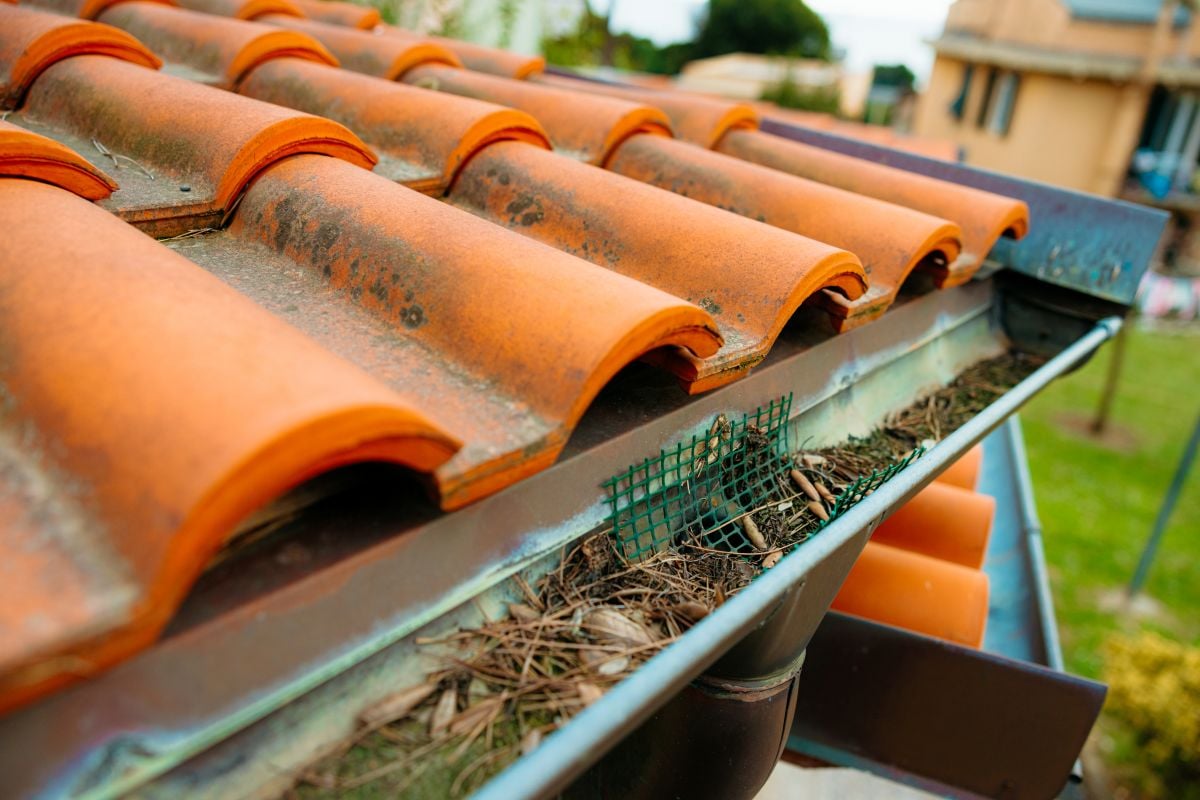
Clogged gutters and downspouts are one of the most immediate and visible consequences of pine needle buildup on Spokane roofs. As needles wash off the roof during rain or snowmelt, they collect in gutters and pack into downspout openings, blocking water flow. Once gutters overflow, water spills down siding, soaks fascia boards, damages landscaping, and can even reach the foundation. The added weight of water-soaked needles can also pull gutters loose from the fascia, causing further structural and aesthetic damage to the home.
- Gutter blockage: Packed needles prevent water from flowing toward downspouts as designed.
- Overflow damage: Water spilling over gutters damages fascia, siding, and landscaping below.
- Downspout obstruction: Needles compact in downspout openings, creating stubborn clogs.
- Gutter sag: Wet, needle-filled gutters can pull loose from the fascia under their own weight.

4. Roof Valley Water Backups
Roof valleys are designed to channel water off the roof quickly, but pine needles love to collect in valleys and create debris dams that back up water. When water pools behind a needle dam in a roof valley, it seeps under the surrounding shingles, through nail holes, and into the underlayment and decking. Valley leaks are among the most damaging because the affected area gets soaked repeatedly with every rain event, leading to widespread decking rot that is invisible from the surface until major repairs are needed.
- Needle dams: Accumulated needles in roof valleys block water flow and cause pooling.
- Shingle infiltration: Standing water seeps under shingle edges and into the roof system.
- Hidden valley rot: Decking damage in valleys is often invisible until interior leaks appear.
- Expensive repairs: Valley leaks typically require shingle removal and decking replacement.
5. Capillary Action and Hidden Leaks
Pine needles can cause hidden leaks through capillary action, drawing water sideways and upward under shingles where it should never reach. When needles pack tightly against shingles during rainfall, they act like tiny straws, wicking water past designed water-shedding paths and into the underlayment. This wicking effect is particularly damaging because the leaks often appear in unexpected places inside the home, far from where the needles actually sit on the roof. By the time interior stains appear, the underlayment and decking have often already absorbed significant water damage.
- Capillary wicking: Compressed needles draw water under shingles and into the underlayment.
- Unexpected leak paths: Interior stains may appear far from the actual roof entry point.
- Underlayment damage: Repeated wicking saturates underlayment and accelerates breakdown.
- Slow discovery: Capillary-driven leaks often go unnoticed for months or years.
6. Ice Dam Formation in Winter
Pine needles directly contribute to ice dam formation on Spokane roofs during winter. Heavy needle accumulation along eaves and in valleys creates uneven snow melt patterns and traps moisture at the lower portions of the roof, where freezing temperatures convert it into ice. The ice dam then prevents subsequent snowmelt from draining, forcing water back up under shingles and into the home. Spokane’s cold winters and freeze-thaw cycles make ice dams a serious recurring issue, and pine needle accumulation significantly worsens the problem on affected roofs.
- Uneven snowmelt: Needle mats trap warmer roof areas, creating freeze-thaw conditions perfect for ice dams.
- Eave accumulation: Needles along eaves block drainage and accelerate ice formation.
- Water backup: Ice dams force snowmelt under shingles and into the home interior.
- Repeated damage: Each winter cycle adds incremental damage to the roof system.
7. Granule Loss and Premature Roof Aging
Pine needles accelerate granule loss on asphalt shingles, contributing to premature roof aging across the Inland Northwest. The protective mineral granules on shingles are designed to shield the asphalt below from UV radiation, but trapped moisture, biological growth, and the abrasive action of windblown needles wear granules off the shingle surface. Once granules are gone, the underlying asphalt is directly exposed to sun, accelerating the breakdown of the shingle. Visible signs include shiny bare spots on shingles and granule accumulation in gutters and downspout splash zones.
- Granule abrasion: Wind-driven needles and trapped debris physically wear granules off shingles.
- UV exposure: Lost granules leave asphalt exposed to damaging sun and accelerated aging.
- Visible signs: Bare shiny spots on shingles and granules collecting in gutters indicate progression.
- Shortened lifespan: Heavy granule loss can cut a 25 to 30 year roof to 15 years or less.
8. Increased Wildfire Risk
Pine needles on the roof and in the gutters create a serious wildfire risk during Spokane’s increasingly dry summers and active fire seasons. NFPA Firewise USA guidance identifies roofs and gutters as primary ember collection points where home ignition frequently begins during wildfires, because windborne embers from distant fires can travel for miles and land on combustible debris like dried pine needles. Even Class A fire-rated roofing materials can fail to protect the home if dry needles are smoldering in the gutters or piled on the roof surface. Keeping the roof and gutters clear is one of the single most effective wildfire mitigation steps a Spokane homeowner can take.
- Ember ignition: Dry needles ignite easily from windborne embers during active wildfire events.
- Gutter fire risk: Needle-filled gutters create continuous fuel paths along the roofline.
- Class A roof bypass: Even fire-rated roofs can fail if combustible debris is present.
- Defensible space: Clearing the roof is a core part of NFPA Firewise wildfire preparation.
How to Prevent Pine Needle Damage to Your Spokane Roof
Preventing pine needle damage starts with reducing how many needles reach your roof and how long they stay there once they arrive. A combination of landscaping, gutter protection, and routine inspection creates the most effective prevention strategy.
What Are the Best Prevention Strategies?
The best prevention strategies for pine needle damage include tree trimming, gutter guards, roof debris removal, and proactive seasonal inspections. Tree branches that overhang the roof should be trimmed back to at least 10 feet of clearance, which significantly reduces direct needle drop onto the roof surface. Gutter guards designed for fine debris like pine needles can be especially effective in heavily wooded Spokane neighborhoods, though no gutter guard fully eliminates the need for periodic cleaning. Pairing physical prevention with a regular cleaning schedule delivers the best long-term protection.
- Tree trimming: Cut back overhanging branches to at least 10 feet from the roof edge.
- Gutter guards: Install fine-mesh guards designed for pine needle exclusion.
- Routine inspection: Walk the property and inspect the roof twice a year for accumulation.
- Zinc or copper strips: Metal strips at the ridge release ions that inhibit moss and algae growth.
How Often Should You Clean Pine Needles Off Your Roof?
You should clean pine needles off your Spokane roof at least twice a year, ideally in late spring after the snow melts and in late fall after the heaviest needle drop. Homes under heavy tree cover may need cleaning four times a year to keep up with accumulation. Gutters should be checked even more frequently, especially after major storms or windy stretches that can deposit large quantities of needles in a single event. Setting a consistent calendar reminder for inspection and cleaning is the most reliable way to stay ahead of damage.
- Twice yearly minimum: Schedule cleanings in spring and fall as a baseline routine.
- Heavy tree cover: Properties with dense pine canopy may need quarterly cleaning.
- Post-storm checks: Inspect after major wind or storm events that can deposit heavy needle loads.
- Pre-winter cleaning: Always clear needles before snow arrives to reduce ice dam risk.
How to Safely Clean Pine Needles From Your Roof
Cleaning pine needles from a roof is a job many homeowners can handle for low-pitch, single-story roofs, but the work carries real injury risk and should be approached with care. Knowing the right tools and techniques protects both you and the roof itself.
What Tools Should You Use?
The best tools for safely cleaning pine needles include a sturdy ladder, a leaf blower, a soft-bristle roof brush or telescoping broom, and a garden hose with a low-pressure nozzle. Avoid pressure washers, which can damage shingles and force water under the roofing material. Soft brushes and leaf blowers work most needles loose without harming the roof surface, while a garden hose can wash remaining debris off the roof edge. Always wear non-slip footwear and work with a partner who can spot the ladder.
- Leaf blower: A backpack or handheld blower clears most needles without contacting the roof surface.
- Soft-bristle broom or brush: Removes stubborn debris without damaging shingles or granules.
- Garden hose: Low-pressure rinsing washes loose debris off the roof edge.
- Safety gear: Non-slip shoes, a sturdy ladder, and a partner are essential.
When Should You Hire a Professional?
You should hire a professional to clean pine needles from your roof when the roof is steep, multi-story, or showing signs of damage like moss growth, lifted shingles, or active leaks. Professionals have the safety equipment, experience, and tools to clean roofs efficiently without damaging the surface. The cost of professional roof cleaning typically runs $300 to $600 for an average Spokane home, and the service often includes an inspection that catches problems before they become expensive repairs. For homes with significant tree cover, scheduling annual professional cleaning is often the most cost-effective approach.
- Steep pitch: Roofs above 8:12 pitch require professional safety equipment and experience.
- Multi-story homes: Two and three-story homes are unsafe for most DIY roof cleaning.
- Visible damage: Moss, lifted shingles, or active leaks call for professional assessment.
- Annual contracts: Many Spokane homeowners save money by scheduling annual cleanings with a trusted contractor.
Frequently Asked Questions About Pine Needles and Spokane Roofs

How Much Does Professional Pine Needle Roof Cleaning Cost in Spokane?
Professional pine needle roof cleaning in Spokane typically costs $300 to $600 for a standard single-family home, with larger homes, steep roofs, or heavy moss treatment running $700 to $1,200 or more. Most reputable Spokane roofing contractors offer cleaning as part of broader maintenance services, often bundled with gutter cleaning, roof inspection, and minor repairs. Always request a written estimate and confirm the company is licensed and insured before scheduling.
Can Pine Needles Cause a Roof Leak?
Yes, pine needles can absolutely cause roof leaks through several mechanisms, including capillary water wicking under shingles, gutter overflow that damages fascia and siding, valley dams that back up water under shingles, and ice dam formation in winter. The leaks caused by pine needles often appear far from the original problem area, which is why prevention through regular cleaning is far more cost-effective than waiting for damage to appear.
Are Some Roof Materials Better at Handling Pine Needles?
Yes, some roof materials handle pine needles better than others. Metal roofing sheds needles naturally due to its smooth surface and lacks the texture that traps debris on shingles. Architectural asphalt shingles handle needles better than older three-tab styles, and algae-resistant shingles with copper or zinc granules inhibit moss growth. Tile and slate roofs handle needles reasonably well but can be damaged during careless cleaning attempts.
Do Gutter Guards Stop Pine Needles?
Most gutter guards reduce pine needle clogging significantly but rarely stop it completely, because fine pine needles can slip through standard mesh sizes. Look for gutter guards specifically rated for pine needle exclusion, typically featuring micro-mesh screens with very small openings. Even the best gutter guards require periodic inspection and cleaning, especially in heavily wooded Spokane neighborhoods.
When Is the Best Time to Clean Pine Needles Off a Spokane Roof?
The best times to clean pine needles off a Spokane roof are late spring after snow melts and late fall after the heaviest needle drop, with additional cleanings after major wind or storm events. Avoid cleaning during winter when ice and snow create dangerous conditions, and time your fall cleaning before snow arrives to reduce ice dam risk through the winter months.
Trust Alpine Roofing for Pine Needle Damage Prevention and Repair
When it comes to pine needles roof damage Spokane homeowners face every season, the difference between a roof that lasts decades and one that fails early often comes down to regular maintenance and prompt response to early warning signs. Alpine Roofing has years of experience inspecting, cleaning, and repairing Spokane roofs affected by pine needle accumulation, with the local expertise to spot trouble before it becomes a major problem. Whether you need a professional roof cleaning, an inspection for hidden damage, or repair work on shingles, valleys, or decking, our team has the experience and tools to protect your home. Contact Alpine Roofing today for expert guidance on keeping your Spokane roof safe from pine needle damage.
Fresh From Our Blog


Happy Roof, Happy Home


