



How to Remove Moss From Your Roof in Spokane: Pro Guide
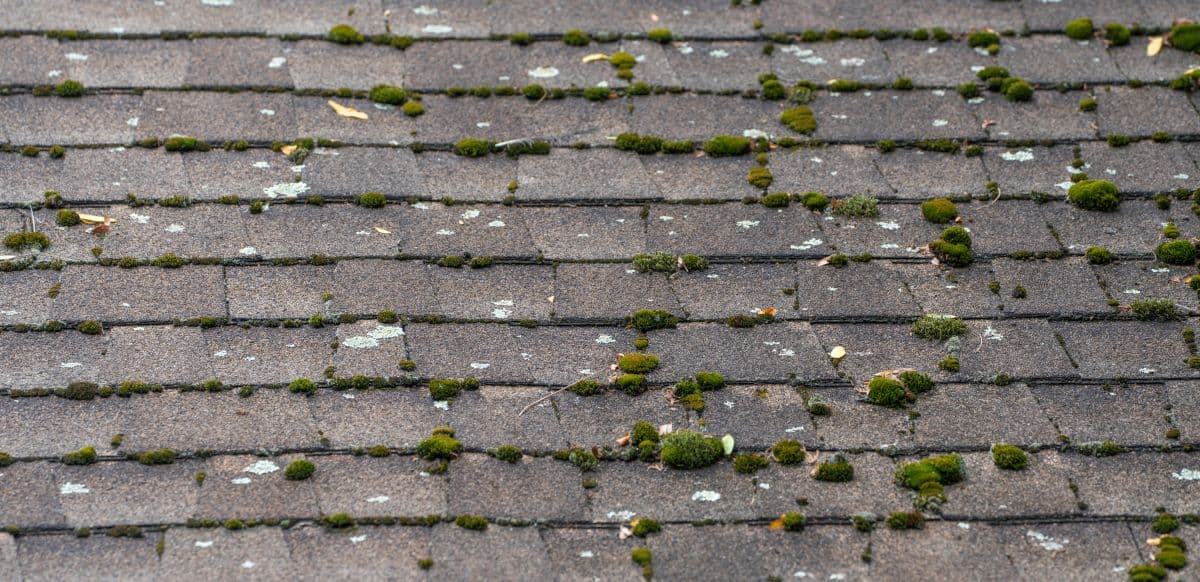
Learning how to remove moss from roof Spokane homes requires understanding the specific moss growth patterns of the Inland Northwest, where drier summers limit aggressive growth but shaded north-facing slopes still develop significant moss colonies. While Spokane’s climate is far less moss-friendly than the wet western Washington coast, homes with tree coverage, north-facing roof slopes, or persistent shade can still develop moss problems that damage shingles, accelerate roof aging, and lead to leaks if left untreated.
In this guide, you will learn:
- Why moss damages Spokane roofs: How even moderate moss growth shortens shingle life and causes water intrusion.
- The 6 steps to safely remove moss: A clear, professional process for treating moss without damaging your roof.
- How to prevent moss from coming back: Long-term strategies that keep your roof clean for years.

Understanding Why Moss Damages Spokane Roofs
Moss is more than a cosmetic issue on Spokane roofs. The plant actively damages roofing materials through moisture retention and physical lifting, which is why removing it promptly matters for the long-term health of your roof.
How Does Moss Damage a Roof?
Moss damages a roof in three primary ways: by retaining moisture against the shingle surface, by physically lifting shingles as it grows under their edges, and by trapping decaying organic debris that accelerates shingle aging. Unlike many plants, moss has no true roots and instead anchors to surfaces with structures called rhizoids, which work their way into gaps between shingles and lift them over time. The moisture moss holds against the roof can also seep into nail penetrations, slip under shingle edges, and reach the underlayment and decking, where it leads to rot. Even moderate moss growth can reduce shingle lifespan by 5 to 10 years.
- Moisture retention: Moss holds water against shingles for days after rain or snowmelt.
- Shingle lifting: Rhizoids work into shingle gaps and physically lift roofing material.
- Granule loss: Trapped moisture and growing moss accelerate granule loss on asphalt shingles.
- Decking damage: Persistent moss leaks can rot underlayment and decking over time.
Why Does Moss Grow on Spokane Roofs?
Moss grows on Spokane roofs where moisture and shade combine to create suitable conditions, primarily on north-facing slopes, under heavy tree cover, and in areas where debris accumulates and holds water. According to Oregon State University Extension Service research, the most common roof mosses in the Pacific Northwest are Dicranoweisia cirrata and Bryum capillare, and the same plant pathologist research confirms that trimming nearby trees to let in sunlight is the single most effective long-term prevention strategy. Spokane’s drier summers slow moss growth compared to western Washington, but shaded slopes and heavily wooded properties still develop significant colonies.
- Shade dependence: Moss requires shade to thrive, which is why north-facing slopes show the most growth.
- Moisture requirement: Spokane’s fall and spring rains support moss colonization on susceptible roofs.
- Tree cover: Properties with dense overhanging trees see the heaviest moss growth.
- Debris accumulation: Pine needles, leaves, and dirt provide the substrate moss needs to take hold.
6 Steps to Safely Remove Moss From Your Spokane Roof
The 6 steps to safely remove moss from your Spokane roof include choosing the right timing, gathering proper tools, clearing debris, applying treatment, removing dead moss gently, and rinsing the roof thoroughly. Following this process protects both your roof and your safety throughout the work.
1. Choose the Right Time of Year for Moss Removal
Late spring through early fall is the best time to remove moss from a Spokane roof, when temperatures stay above 50 degrees and the roof surface is dry. Avoid working in winter when ice and snow create dangerous conditions, and skip wet days when roof surfaces become slippery and treatments wash off before they can work. The ideal window in Spokane runs from May through September, with September being particularly favorable because moss has had time to mature and treatments produce visible results before winter sets in. Cloudy but dry days work best because they keep treatments active longer without drying out too quickly.
- Dry conditions: Wait for at least 2 days of dry weather before starting moss removal.
- Temperature window: Work when temperatures stay between 50 and 80 degrees Fahrenheit.
- Avoid summer extremes: Skip 90-degree-plus days that cause treatments to evaporate too quickly.
- September favorite: Late summer through early fall is the optimal window in Spokane.
2. Gather the Right Tools and Safety Equipment
The right tools for moss removal include a sturdy ladder, non-slip shoes, safety harness, soft-bristle brush or broom, garden sprayer, and the appropriate moss treatment product. Never use a pressure washer, which can strip protective granules from shingles, force water under shingles, and void manufacturer warranties. A long-handled scrub brush gives the same cleaning result without the damage. Safety equipment matters because roof falls are one of the most common causes of serious DIY injuries in the United States, and slippery moss makes the risk significantly higher.
- Ladder safety: Use a sturdy ladder that extends 3 feet above the roof line, set on stable ground.
- Non-slip footwear: Wear shoes designed for roof work, with strong rubber soles for grip.
- Soft-bristle brush: Replace any urge to pressure wash with a long-handled scrub brush.
- Garden sprayer: Pump-style sprayers apply moss treatments evenly without overspray.
- Treatment product: Choose zinc sulfate, potassium salts of fatty acids, or a commercial moss killer.
3. Clear Debris From the Roof
Before applying any moss treatment, clear all loose debris from the roof surface using a soft broom or leaf blower from a stable ladder position. Pine needles, leaves, twigs, and dirt all hold moisture against the roof and feed moss regrowth, so removing them is essential for any moss removal effort to last. Pay special attention to roof valleys, areas behind chimneys, and any spots where debris naturally accumulates upslope of penetrations. Working downhill keeps the cleared debris moving off the roof and prevents pushing it under shingles.
- Soft broom or blower: Clear leaves, needles, and dirt without damaging shingles.
- Work downhill: Move debris from ridge toward eaves to keep material flowing off the roof.
- Valley focus: Clean roof valleys thoroughly because they collect the most debris.
- Penetration areas: Pay attention to spots upslope of chimneys, vents, and skylights.
4. Apply a Moss-Killing Treatment
The most effective moss treatments for Spokane roofs include zinc sulfate monohydrate, potassium salts of fatty acids, and commercial moss removal products designed for asphalt shingles. According to OSU Extension guidance, zinc sulfate can be mixed at 3 pounds of powder per 9 gallons of water and applied with a pump sprayer to treat 600 to 1,000 square feet of roof, depending on the severity of growth. Do not use zinc-based products if your roof has copper gutters, downspouts, or flashing because zinc corrodes copper on contact. Apply treatment evenly across affected areas and allow it to sit for the time specified by the product label, typically 15 minutes to several hours.
- Zinc sulfate mix: 3 pounds in 9 gallons of water treats 600-1,000 square feet of roof.
- Potassium salts: Soap-based biodegradable option that is safer for plants and pets.
- Commercial products: Manufacturer-specific moss treatments are available at home centers.
- Avoid bleach mixtures: Chlorine bleach damages plants and can corrode metal flashing.
5. Gently Remove Dead Moss
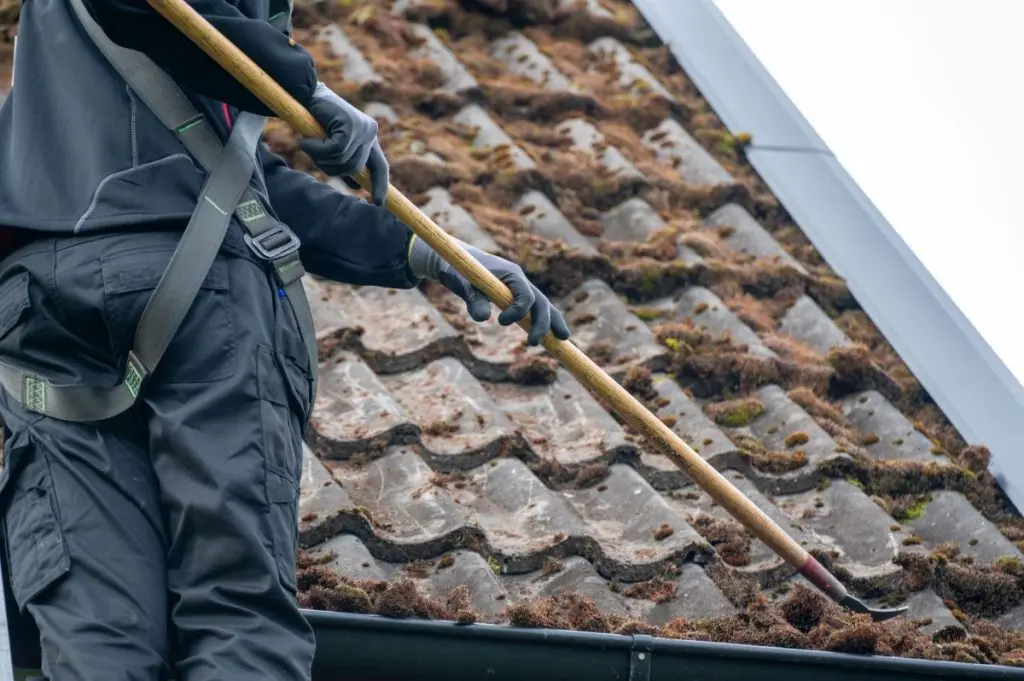
Once treatment has killed the moss (typically 1 to 7 days after application), use a soft-bristle brush or broom to gently sweep dead moss off the roof, working from the ridge downward to avoid lifting shingles. Never scrape aggressively with metal tools or pressure wash, both of which damage shingle surfaces and reduce roof life significantly. Some moss will fall off naturally during rain events after treatment, which is why many professionals apply treatment in late summer or fall and let winter rain finish the job. Stubborn patches can be brushed away as long as you work parallel to the shingle layers.
- Soft tools only: Use a brush or broom with bristles that do not scratch shingle surfaces.
- Work top to bottom: Sweep from ridge down to eave to avoid lifting shingles.
- No metal scrapers: Avoid putty knives, metal scrapers, or aggressive tools.
- Patience pays: Treatment plus natural rain often removes moss without additional brushing.
6. Rinse and Inspect the Roof
After removing moss, rinse the roof thoroughly with a garden hose at low pressure to wash away any remaining treatment residue, dead moss, and debris. While rinsing, inspect the roof for any damaged shingles, exposed underlayment, or compromised flashing that may have been hidden under the moss. Moss removal often reveals problems that need professional attention, including cracked shingles, missing pieces, and lifted edges. Document any issues with photos for insurance or warranty purposes, and schedule a professional inspection if you find significant damage.
- Low-pressure rinse: Use a standard garden hose, never a pressure washer.
- Damage inspection: Look for cracked shingles, lifted edges, and exposed underlayment.
- Photo documentation: Take dated photos of any damage for insurance and contractor records.
- Professional follow-up: Schedule an inspection if you discover significant problems.
How to Prevent Moss From Returning to Your Spokane Roof
Removing moss is only half the battle on a Spokane roof. Without ongoing prevention, moss will return within 1 to 3 years on roofs with the underlying conditions that supported the original growth.
What Are the Best Long-Term Prevention Strategies?
The best long-term moss prevention strategies for Spokane roofs include trimming overhanging trees to let in more sunlight, regular debris removal, annual roof inspections, and treating high-risk areas with preventive sprays. Tree trimming is by far the most effective single step because moss requires shade to thrive, and reducing shade on the roof creates conditions where moss struggles to establish. Aim for at least 10 feet of clearance between tree branches and the roof surface, which significantly reduces both shade and direct debris drop. Combining tree work with annual cleanings keeps moss from regaining a foothold.
- Tree trimming: Maintain at least 10 feet of clearance between branches and the roof.
- Annual cleaning: Schedule professional roof and gutter cleaning each fall.
- Debris removal: Clear leaves and needles from the roof surface as they accumulate.
- Preventive treatment: Apply moss-prevention spray annually on high-risk slopes.
When Should You Install Zinc or Copper Strips?
Zinc or copper strips installed along the ridge of your roof provide ongoing moss prevention by releasing ions during every rain event that inhibit moss growth on the slope below. The strips work because rainwater picks up trace amounts of metal as it flows over them, creating a hostile environment for moss colonization. Zinc strips are the more affordable option and work well on most asphalt shingle roofs, while copper strips are pricier but more effective and last longer. Both options are particularly valuable on north-facing slopes and roofs that have already had significant moss problems.
- Ridge installation: Strips installed at the ridge protect the slope below through every rainfall.
- Zinc affordability: Zinc strips offer effective protection at a lower price point.
- Copper performance: Copper strips work better and last longer, but cost more.
- North-facing focus: Install strips on the slopes most prone to moss growth.
When to Call a Professional Roofer for Moss Removal
Some moss removal jobs are manageable for homeowners, while others demand professional expertise, safety equipment, and warranty-preserving techniques. Knowing when to escalate protects both your safety and your investment.
When Is DIY Moss Removal a Bad Idea?
DIY moss removal is a bad idea when the roof is steep, multi-story, heavily infested with moss, showing signs of existing damage, or covered with shingles still under manufacturer warranty. Roof falls are one of the leading causes of serious home injuries, and slippery moss-covered slopes dramatically increase the risk. Professionals also use techniques and products that maintain shingle warranties, while improper DIY work can void coverage and leave you on the hook for any future failures. The cost of professional moss removal is typically far less than the cost of a roof fall or a voided warranty.
- Steep pitch: Roofs above 8:12 pitch require professional safety equipment and experience.
- Multi-story homes: Two and three-story homes are unsafe for most DIY moss work.
- Heavy infestation: Thick moss colonies often hide damage that requires professional assessment.
- Warranty considerations: Improper DIY work can void manufacturer warranties on the roof.
What Should You Look for in a Spokane Roof Cleaning Professional?
The right Spokane roof cleaning professional combines proper Washington state licensing, liability insurance, manufacturer-approved techniques, and a clear understanding of the local climate. Be wary of contractors who insist on pressure washing for moss removal, because this technique damages shingles and is rejected by most roofing manufacturers. Look for professionals who use soft washing, manual brushing, and approved chemical treatments, and who provide written estimates with clear scopes of work. A reputable cleaner will also inspect for hidden damage and document the work for warranty and insurance purposes.
- Washington licensing: Confirm active contractor registration with WA Department of Labor & Industries.
- No pressure washing: Quality professionals use soft washing and manual techniques.
- Written estimates: Insist on detailed written scopes of work before any service.
- Damage documentation: Reputable cleaners report any damage they find during the job.
Frequently Asked Questions About Roof Moss Removal in Spokane
How Much Does Professional Moss Removal Cost in Spokane?
Professional moss removal in Spokane typically costs $400 to $900 for a standard single-family home, with larger homes, steep roofs, or heavy infestations running $900 to $1,500 or more. The price usually includes inspection, debris removal, treatment application, and final cleanup. Many Spokane contractors offer moss removal as part of broader roof maintenance packages, which often deliver better value than standalone service calls.
Does Bleach Kill Roof Moss?
Bleach kills roof moss, but most roofing professionals strongly recommend against using it because chlorine bleach can damage plants, corrode metal flashing, harm pets, and run off into storm drains. Safer alternatives like zinc sulfate, potassium salts of fatty acids, and commercial moss killers work effectively without the environmental and material damage of bleach. If you do use bleach, dilute it heavily and protect surrounding landscaping carefully.
How Often Should I Remove Moss From My Spokane Roof?
You should inspect your Spokane roof for moss at least twice a year, in spring and fall, and remove any growth as soon as it appears. Light moss growth on a north-facing slope can be addressed in a single annual cleaning, while heavily shaded roofs may need more frequent attention. Preventive treatments applied annually keep most homes moss-free with minimal effort.
Will Insurance Cover Roof Damage Caused by Moss?
Homeowners insurance typically does not cover roof damage caused by moss because moss damage is classified as a maintenance issue rather than sudden accidental damage. This makes prevention especially important, since the cost of professional moss removal is far less than the cost of replacing a moss-damaged roof out of pocket. Document your maintenance efforts in case insurance questions ever arise about roof condition.
Can Moss Cause a Roof Leak in Spokane?
Yes, moss can absolutely cause a roof leak by lifting shingles, holding moisture against the roof surface, and forcing water under shingle edges through capillary action. The leaks caused by moss often appear far from the moss colony itself, which is why prevention through regular cleaning is far more cost-effective than waiting for visible damage. Any leak appearing on a moss-affected roof warrants immediate professional inspection.
Trust Alpine Roofing for Expert Moss Removal in Spokane
When it comes to learning how to remove moss from roof Spokane installations safely, the difference between a clean, protected roof and accidental damage often comes down to using the right techniques and products. Alpine Roofing’s Spokane roofers bring years of experience treating moss across Spokane neighborhoods, with the expertise to clean roofs safely, preserve manufacturer warranties, and identify any hidden damage that moss has caused. Our team uses soft washing, manual removal techniques, and approved treatments to keep your roof clean without the risks of DIY work or aggressive pressure washing. Contact Alpine Roofing today for a free inspection and expert guidance on removing moss from your Spokane roof.
Fresh From Our Blog
Happy Roof, Happy Home