


Should I Stay Home During a Roof Replacement? What to Expect
If you’re asking “should I stay home during roof replacement“, the short answer is yes, you can typically stay in your home throughout the entire process, but there are real factors to weigh before deciding what is right for your family. Roof replacement is a noisy, dusty, multi-day undertaking, and understanding what to expect helps you decide whether to stay put, plan a getaway, or split the difference.
In this guide, you will learn:
- What a roof replacement actually involves day to day: A clear breakdown of the noise, traffic, and disruption you can expect at each stage.
- Who should consider staying versus leaving: Practical guidance for families with kids, pets, remote workers, and noise-sensitive members.
- How to prepare your home and family: Step-by-step tips for making the experience as smooth and stress-free as possible.
Understanding What Happens During a Roof Replacement

Before deciding whether to stay home, it helps to know what a roof replacement actually looks and sounds like. Most homeowners are surprised by how disruptive the process can be, even on a well-organized job.
What to Expect Day by Day
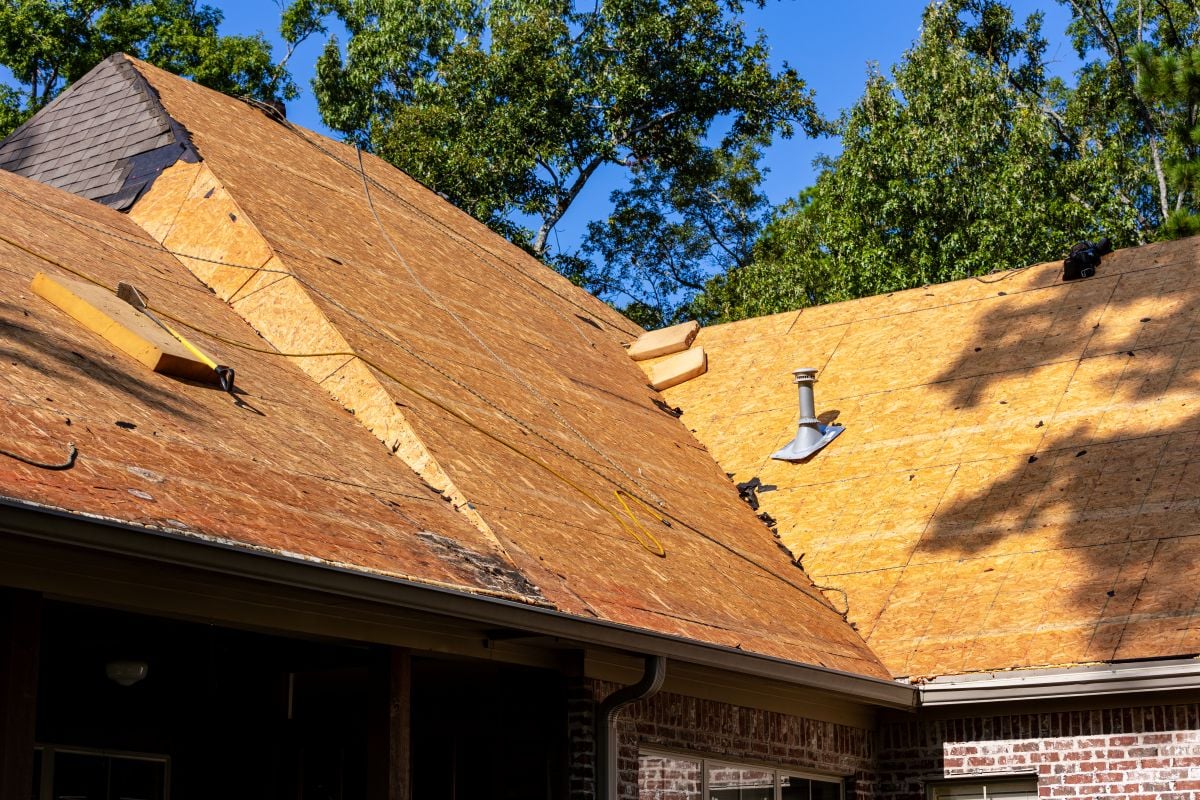
A typical residential roof replacement takes one to three days for an average-sized home with asphalt shingles, though larger homes, premium materials, or weather delays can stretch the timeline to a week or more. Asphalt shingle roofs on average homes most often complete in 1-3 days when weather cooperates and no structural repairs are needed. Each day brings a different kind of activity, from messy tear-off to careful new installation, and the noise level varies throughout.
- Day one (tear-off): The loudest, dustiest day, with crews removing old shingles and dropping debris into a dumpster.
- Day two (deck inspection and prep): Quieter work focused on inspecting decking, replacing damaged wood, and installing underlayment.
- Day three (new roof installation): Steady hammering and nail gun activity as the new shingles, flashing, and accessories go on.
- Final cleanup: Crews magnet-sweep the yard for nails, haul away the dumpster, and complete a walkthrough with the homeowner.
The Noise and Vibration You Should Expect
A roof replacement is genuinely loud, and the sound carries through every room of the house. Pneumatic nail guns, hammers, footsteps, and falling debris create constant noise from the moment crews start until they pack up for the day. The vibration can shake light fixtures, rattle picture frames, and even crack glassware on open shelves if items are not secured. Anyone hoping to take naps, hold video calls, or focus on detailed work during the day should plan accordingly because peace and quiet are not realistic during active work hours.
- Constant hammering: Expect rhythmic nail gun and hammer impacts from sunrise through late afternoon.
- Falling debris: Old shingles, nails, and decking pieces hit the ground with loud, sudden thuds throughout tear-off.
- Vibration through ceilings: Light fixtures, ceiling fans, and wall-mounted items can shake noticeably during peak work.
- Worker foot traffic: The sound of crew members walking across the roof carries clearly into every room below.
7 Reasons You Might Choose to Stay or Leave
Whether to stay home during a roof replacement comes down to your household, your work situation, and your tolerance for disruption. The following factors are the ones most homeowners weigh before making a final call.
1. You Work From Home and Need Quiet
If your job depends on phone calls, video conferences, or focused concentration, staying home during a roof replacement is going to be challenging. The noise level makes professional calls nearly impossible, and the vibration can disrupt even text-based work. Many remote workers choose to relocate to a coffee shop, library, or coworking space for the duration of the work, while others take the days off entirely. If you must work from home, plan to use noise-canceling headphones, schedule meetings around lunch breaks when crews often pause, and warn colleagues in advance about possible background noise.
- Video calls: Background noise will be heard by everyone on the call, even with quality headphones.
- Focused work: Concentration becomes difficult with constant hammering and impact noise overhead.
- Phone calls: Outdoor crew conversations and equipment noise carry into your home office.
- Backup plan: Have a coffee shop, library, or family member’s home ready as an alternative workspace.
2. You Have Young Children or Infants
Families with babies, toddlers, or young children often find roof replacement days extremely disruptive. Nap schedules go out the window, the noise can frighten little ones, and keeping kids safely away from the work zone in the yard becomes a constant task. Many parents choose to spend the workdays at a park, a relative’s house, or a children’s museum, returning home in the evening once the crew has left. If staying home is unavoidable, plan structured indoor activities, prepare for missed naps, and keep children well away from the perimeter where falling debris is a real hazard.
- Disrupted naps: Continuous noise makes daytime sleep nearly impossible for most young children.
- Safety concerns: Falling shingles and debris around the home perimeter create real injury risks for kids.
- Indoor confinement: Keeping children inside and away from windows is the safest approach during active work.
- Backup plans: Schedule park visits, library trips, or playdates to fill the day away from the noise.
3. You Have Pets in the Home

Pets, especially dogs and cats, often experience significant stress during roof replacement. The noise, vibration, and presence of unfamiliar workers can trigger anxiety, hiding behavior, or even escape attempts. Many pet owners arrange for daycare, boarding, or a stay with friends or family during the busiest days of the work. If your pet stays home, create a quiet, secure space in the most insulated part of your home, ideally a basement or interior room, and check on them frequently throughout the day. Never let pets roam the yard while crews are working.
- Anxiety and stress: Loud, unpredictable noise can trigger lasting behavioral issues in sensitive pets.
- Escape risk: Frightened pets may try to bolt through open doors as workers come and go.
- Quiet retreat: Designate a basement or interior room with familiar bedding, water, and white noise.
- Daycare option: Boarding or doggy daycare for the noisiest days protects your pet and your peace of mind.
4. You or Family Members Are Noise-Sensitive
Anyone with sensory sensitivities, migraine triggers, autism spectrum conditions, or chronic illness may find the noise level genuinely difficult to tolerate. Roof replacement noise is not background noise, it is constant impact sound that can trigger headaches, sensory overload, or significant stress for sensitive individuals. If anyone in your household falls into this category, planning to be elsewhere during work hours is often the kindest choice. A daytime hotel stay, a visit to family, or even a long day at a quiet park can spare a sensitive household member real distress.
- Sensory overload: Constant impact noise can overwhelm individuals with sensory processing differences.
- Migraine triggers: Loud, repetitive sounds frequently trigger migraines and severe headaches in vulnerable people.
- Stress impact: Even neurotypical adults often report elevated stress and fatigue after a full day of roofing noise.
- Day-trip plan: Build a daytime escape plan that gets sensitive household members out of the home during peak hours.
5. You Want to Monitor the Work Closely
Some homeowners prefer to stay home specifically because they want to oversee the work, ask questions, and make on-the-spot decisions. Roof replacement often reveals hidden issues like rotten decking, old flashing problems, or ventilation deficiencies, and being present means you can be consulted immediately when those decisions arise. A good contractor will keep you informed either way, but homeowners who like to be hands-on often appreciate seeing the process firsthand and building rapport with the crew foreman.
- Hidden damage decisions: Rotten decking and flashing issues sometimes require quick approval to keep the work moving.
- Quality oversight: Being onsite lets you see the workmanship and ask questions in real time.
- Direct communication: A short conversation with the foreman each morning prevents miscommunication.
- Final walkthrough: Being present at the end allows you to inspect the work and confirm cleanup.
6. You Have Health Conditions That Require Rest
Anyone recovering from surgery, managing a chronic illness, working night shifts, or dealing with health conditions that require quiet recovery should strongly consider being elsewhere during the work. Sleep is essentially impossible during active roofing hours, and the vibration can be uncomfortable for anyone bedridden or healing. A short hotel stay or extended visit with family is often the best option for households with someone who needs genuine rest during the day.
- Sleep disruption: Daytime rest is impossible during active roofing, which affects night-shift workers and the chronically ill.
- Recovery needs: Post-surgical patients and those healing from injuries need quiet that the work cannot allow.
- Vibration discomfort: Bed-bound family members may feel the vibration directly through the structure.
- Alternative arrangements: Plan a hotel stay, family visit, or temporary daytime relocation for the affected person.
7. You Want to Save Money and Stay Convenient
For many homeowners, staying home is the most practical and affordable option. There is no hotel bill, no boarding fees for pets, and no need to disrupt daily routines beyond the noise itself. If your work is flexible, your kids are in school during the day, and your pets handle noise reasonably well, staying home often makes the most sense. Plan to be out of the house during peak work hours if possible, even just for errands, meals, or coffee runs, and use the evenings to enjoy your normal home routine.
- Cost savings: No hotel, daycare, or boarding expenses keep the overall investment focused on the roof itself.
- Daily routine: Kids in school and adults at work means the home is naturally empty during peak noise.
- Easy access: Staying home makes it simple to grab anything you need without packing or planning around being away.
- Evening normalcy: Crews leave by late afternoon, restoring quiet for dinner, family time, and sleep.
How to Prepare Your Home for the Work

A little preparation goes a long way toward making roof replacement smoother and protecting your belongings from accidental damage. Most contractors will give you a prep checklist, but the basics apply to nearly every home.
Inside Your Home
The vibration from a roof replacement can dislodge items on shelves, walls, and ceilings throughout the house. Take a walk through every room before work begins and remove anything that could fall, break, or shift. Pay special attention to the attic, where dust and debris can sift down through gaps and cracks during tear-off. Cover stored items with sheets or plastic, and consider moving valuable or fragile pieces away from upper floors entirely.
- Wall art and mirrors: Take down framed pieces that could vibrate loose and fall during heavy hammering.
- Shelves and mantels: Move breakables to drawers or boxes until the work is complete.
- Attic storage: Cover stored items with plastic sheeting to protect against falling dust and debris.
- Ceiling fixtures: Note any chandeliers or pendants that may need temporary removal in older homes.
Outside Your Home
The exterior preparation matters just as much as the interior. Crews need clear access to the entire perimeter of the home for ladders, debris management, and the dumpster, and anything left in the work zone is at risk of damage. A short prep session the day before the crew arrives prevents most of the common issues homeowners encounter.
- Vehicles: Park cars in the street or a neighbor’s driveway to give crews full access.
- Patio furniture: Move outdoor furniture, grills, and decor at least 15 feet from the home.
- Landscaping: Cover delicate plants and shrubs along the perimeter with tarps or plywood sheets.
- Pool and spa covers: Cover pools, hot tubs, and water features to protect against falling debris.
Trust Alpine Roofing for a Smooth Roof Replacement Experience
When you partner with Alpine Roofing, you get more than a new roof, you get a team that respects your home, your time, and your daily life throughout the entire process. Our crews arrive on time, communicate clearly, work efficiently, and leave your property cleaner than we found it, which is why so many Spokane homeowners choose us when it is time for a roof replacement. Whether you choose to stay home during the work or step away for a few days, we will keep you informed at every stage and deliver a finished roof you can rely on for decades. Contact Alpine Roofing today for a free inspection and expert guidance on planning your roof replacement with as little disruption as possible.
Fresh From Our Blog

Happy Roof, Happy Home


