


Is It Bad to Vent a Dryer Through the Roof? What Homeowners Should Know
A dryer vent on roof installations is generally not recommended by professional roofers, HVAC technicians, and fire safety experts because of increased lint buildup, harder maintenance access, and a higher risk of roof leaks compared to wall or eave-mounted vents. While venting a clothes dryer through the roof is permitted under most building codes when done correctly, the long-term trade-offs make it one of the most problematic dryer vent configurations for everyday homeowners.
In this guide, you will learn:
- Why roof-mounted dryer vents create problems: The specific safety, performance, and maintenance issues that make roof vents a poor first choice.
- The fire and efficiency risks of venting through the roof: What lint buildup, long vent runs, and limited access do to dryer performance and home safety.
- Better alternatives and when to keep a roof vent: Recommended vent locations and the rare situations where a roof vent is the only practical option.
Understanding Roof-Mounted Dryer Vents

A roof-mounted dryer vent connects the exhaust ductwork from your clothes dryer to a vent cap installed on the roof, allowing hot, humid air and lint to exit the home. Understanding how these installations work and why they exist helps homeowners evaluate their current setup and plan for improvements.
What Is a Roof Dryer Vent?
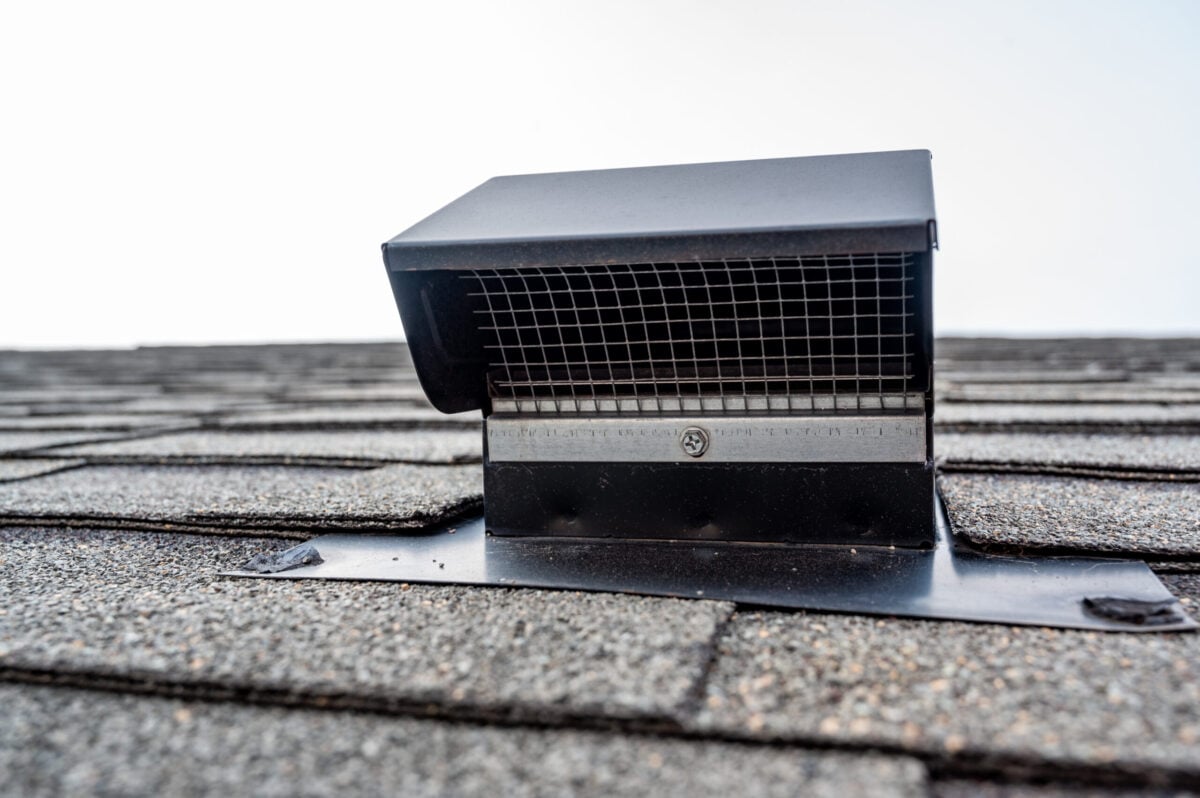
A roof dryer vent is an exhaust termination point on the roof where ductwork from a clothes dryer releases hot air, moisture, and lint outside the home. The system includes a vent cap with a backdraft damper, ductwork running from the dryer up through the attic, and proper sealing around the roof penetration. Roof dryer vents are most common in homes with second-floor laundry rooms, interior laundry closets, or layouts where a wall-mounted vent would require an excessively long horizontal duct run. The setup is technically code-compliant in most jurisdictions but requires careful installation and ongoing maintenance.
- Vent cap location: Mounted on the roof surface with a backdraft damper and animal screen.
- Ductwork path: Runs from the dryer through the attic to the roof penetration.
- Code requirements: Permitted under most residential building codes when installed properly.
- Common installations: Most often found in homes with second-floor or interior laundry rooms.
Why Do Some Homes Have Dryer Vents on the Roof?
Some homes have dryer vents on the roof because the laundry room is located far from any exterior wall, making a roof exit the shortest practical duct run. Modern home designs frequently place laundry rooms on second floors, in interior closets, or near master bedrooms, where wall venting is not feasible without long horizontal duct runs. Builders sometimes choose roof venting to simplify construction or accommodate architectural choices, even when better alternatives exist. While the convenience makes sense at construction time, the long-term ownership costs and risks often outweigh the short-term simplicity.
- Interior laundry rooms: Rooms located away from exterior walls often require roof or long horizontal venting.
- Second-story locations: Upstairs laundry rooms are commonly vented through the roof for shorter duct runs.
- Architectural constraints: Some home designs leave roof venting as the only practical exhaust path.
- Builder convenience: Roof venting can simplify construction even when wall venting would be safer.
5 Reasons a Dryer Vent on the Roof Is Usually a Bad Idea
The reasons a dryer vent on the roof is usually a bad idea include fire risk, maintenance challenges, leak potential, efficiency loss, and pest issues. These five problems combine to make roof venting the least desirable option for most homeowners, especially when better alternatives are available.
1. Increased Lint Buildup and Fire Risk
A dryer vent on the roof typically requires a longer, more vertical duct run, which increases lint accumulation and fire risk significantly. According to the U.S. Fire Administration, approximately 2,900 home dryer fires are reported each year in the United States, and 34 percent of those fires are caused by failure to clean, with lint buildup in vents being the leading culprit. Vertical and long vent runs trap lint at every bend and elbow, and the moisture in dryer exhaust can cause lint to stick rather than blow out, creating a perfect environment for ignition under high heat.
- Lint accumulation: Vertical and long horizontal runs allow lint to stick to duct walls and pile up.
- Failure to clean: 34 percent of dryer fires trace back to inadequate vent cleaning.
- Moisture trap: Roof exits expose vents to rain and condensation that turn lint into clingy paste.
- Hidden buildup: Roof venting hides lint problems from view until they reach dangerous levels.
2. Harder to Clean and Maintain

Dryer vents on the roof are much harder to clean and maintain than wall or eave-mounted alternatives. Cleaning a roof vent requires either climbing onto the roof or hiring a professional with specialized equipment, while wall vents can be cleaned safely from the ground or with a short ladder. Most homeowners skip or delay roof vent cleaning entirely because of the access challenges, which directly contributes to lint accumulation, fire risk, and dryer inefficiency. Even when professionals clean a roof vent, the access challenges drive up service costs significantly.
- Roof access required: Cleaning means climbing onto the roof or hiring a professional with ladders and safety gear.
- Higher service costs: Professional cleaning of roof vents typically costs more than wall vent cleaning.
- Skipped maintenance: Homeowners often delay or skip cleaning entirely because of access difficulty.
- Limited DIY options: Most safe cleaning methods require professional tools for roof installations.
3. Greater Risk of Roof Leaks
Every roof penetration is a potential leak point, and a dryer vent on the roof adds one more spot where flashing, sealants, and the vent cap itself can fail over time. The constant exposure to moisture from dryer exhaust accelerates wear on the surrounding roofing materials, and improperly installed flashing leads to water intrusion that can damage attic insulation, framing, and ceilings. Wall and eave vents avoid this problem entirely because they do not penetrate the roof surface. For older roofs, an aging dryer vent is a common source of mystery leaks that homeowners struggle to identify.
- Roof penetration risk: Every hole in the roof is a potential leak point requiring perfect flashing.
- Sealant degradation: Vent boots and sealants break down over time and need periodic replacement.
- Moisture exposure: Hot, humid exhaust accelerates wear on surrounding roofing materials.
- Hidden water damage: Leaks at roof vents can damage attic structure before any visible signs appear.
4. Reduced Dryer Efficiency
A dryer venting through the roof typically has a longer duct run with more bends, which forces the dryer to work harder and dry clothes less efficiently. Manufacturers specify maximum equivalent length for dryer vents, and every 90-degree elbow adds significantly to that effective length. Long, vertical, or convoluted vent paths increase drying times, raise energy bills, and wear out dryer components faster. Wall vents with short, straight duct runs deliver the best dryer performance and lowest operating costs over the life of the appliance.
- Longer drying times: Restricted airflow forces the dryer to run longer cycles to dry the same loads.
- Higher energy bills: Extended drying times directly raise electric or gas consumption.
- Premature component wear: Heating elements and motors fail sooner when forced to overwork.
- Manufacturer warranty risk: Some dryer warranties limit coverage when vent runs exceed specifications.
5. Pest and Animal Intrusion
Roof-mounted dryer vents are prime targets for birds, squirrels, rodents, and insects looking for warm shelter. Without a quality vent cap and animal screen, pests can nest inside the vent ductwork, blocking airflow and creating both fire and health hazards. Bird nests in particular are a common cause of complete vent blockage on roof installations, and the elevated location makes it harder for homeowners to spot the problem before it becomes serious. Wall vents are not immune to pest issues, but the lower height makes inspection and prevention much easier.
- Bird nesting: Birds frequently build nests in roof vents, completely blocking airflow.
- Rodent intrusion: Squirrels and rats can enter through damaged vent caps and nest in the ductwork.
- Insect colonies: Wasps and other insects build nests inside warm dryer vents.
- Difficult inspection: Pest problems on the roof go unnoticed far longer than ground-level issues.
Better Alternatives to a Roof Dryer Vent
Better alternatives to a roof dryer vent include exterior wall venting, eave venting, and rim-joist venting, all of which offer easier maintenance, lower fire risk, and zero roof penetration concerns. When evaluating your current setup or planning new construction, the goal is the shortest, straightest possible duct run to an exterior wall.
What Are the Recommended Dryer Vent Locations?
The recommended dryer vent locations are exterior walls, eaves, and rim joists, prioritized by the shortest possible duct run from the dryer. A vent installed in an exterior wall just behind or near the dryer creates the most efficient, safest, and lowest-maintenance setup possible. When the laundry room is interior or upstairs, a side-wall or eave vent is almost always better than venting through the roof. Working with an experienced contractor at the construction or remodel stage can almost always find a wall-vent solution that beats roof venting.
- Exterior wall vent: The gold standard for safety, efficiency, and easy maintenance.
- Eave or soffit vent: A good option for upstairs laundry rooms when wall venting is not feasible.
- Rim joist vent: Works well for basement or first-floor laundry rooms with short duct runs.
- Avoid attic termination: Never vent a dryer into the attic itself, which is unsafe and against code.
When Is a Roof Vent the Only Practical Option?
A roof vent is the only practical option in a small number of cases, typically when the laundry room sits in the center of an upper floor and no wall, eave, or soffit path is achievable within the manufacturer’s maximum vent length. In these situations, the roof vent should be installed with premium materials, careful flashing, and a robust maintenance schedule to mitigate the inherent risks. A professional roofing contractor experienced in dryer vent installations can ensure the penetration is properly flashed, the duct path is as short and straight as possible, and the vent cap is appropriate for the climate and roof material.
- Centrally located laundry: Upper-floor interior laundry rooms with no practical wall path.
- Architectural constraints: Homes where wall venting would require excessively long duct runs.
- Code-compliant installation: Must follow manufacturer specifications and local building codes.
- Premium materials required: Use rigid metal duct, professional flashing, and a quality vent cap with damper.
Frequently Asked Questions About Dryer Vents on the Roof

Is It Against Code to Vent a Dryer Through the Roof?
Venting a dryer through the roof is not against code in most jurisdictions, but it must follow specific installation requirements including maximum duct length, proper flashing, and approved materials. Local building codes and the International Residential Code (IRC) set the standards, and the dryer manufacturer’s instructions establish the maximum allowable equivalent vent length. Always check local code requirements before installing or modifying a roof dryer vent.
How Often Should a Roof Dryer Vent Be Cleaned?
A roof dryer vent should be cleaned at least once a year, and ideally every six months for households with heavy dryer use, pets, or long vent runs. Professional cleaning is recommended because roof access requires safety equipment and specialized tools. Signs that a vent needs cleaning include longer drying times, hot dryer cabinets, and lint visible around the roof vent cap.
Can I Move My Dryer Vent From the Roof to a Wall?
You can move a dryer vent from the roof to a wall in many homes, but the change requires reworking the duct path, sealing the old roof penetration, and installing a new wall vent. The cost depends on duct length, drywall repairs, and roofing patch work. A qualified contractor can evaluate your home and recommend whether a wall conversion is feasible and worth the cost.
What Type of Vent Cap Is Best for a Roof Dryer Vent?
The best type of vent cap for a roof dryer vent is a wide-mouth metal cap with a backdraft damper and a pest screen designed for dryer exhaust. Avoid louvered or louver-style caps, which clog easily with lint. Quality vent caps from manufacturers like Dryerbox, Heartland, and DryerJack are specifically designed to resist lint buildup and prevent pest intrusion.
Can a Roof Dryer Vent Cause Mold in the Attic?
A roof dryer vent can cause mold in the attic if the duct leaks, the roof penetration is poorly sealed, or hot, humid exhaust escapes before reaching the vent cap. Dryer exhaust carries significant moisture, and any leak into the attic creates ideal conditions for mold growth on insulation and framing. Properly sealed rigid metal ductwork eliminates this risk in code-compliant installations.
Trust Alpine Roofing for Expert Dryer Vent Solutions
When it comes to a dryer vent on roof installations, the difference between a safe, efficient setup and a long-term safety hazard often comes down to the contractor you choose. Alpine Roofing has years of experience evaluating dryer vent configurations, identifying better alternatives, and installing properly flashed roof vents when no other option exists. Whether you want to relocate an existing roof dryer vent, address a leak at your current vent, or simply have a professional assess your home’s setup, our team has the expertise to recommend the safest and most efficient solution. Contact Alpine Roofing today for a free estimate and expert guidance on protecting your home from the risks of an improperly installed dryer vent.
Fresh From Our Blog

Happy Roof, Happy Home


