




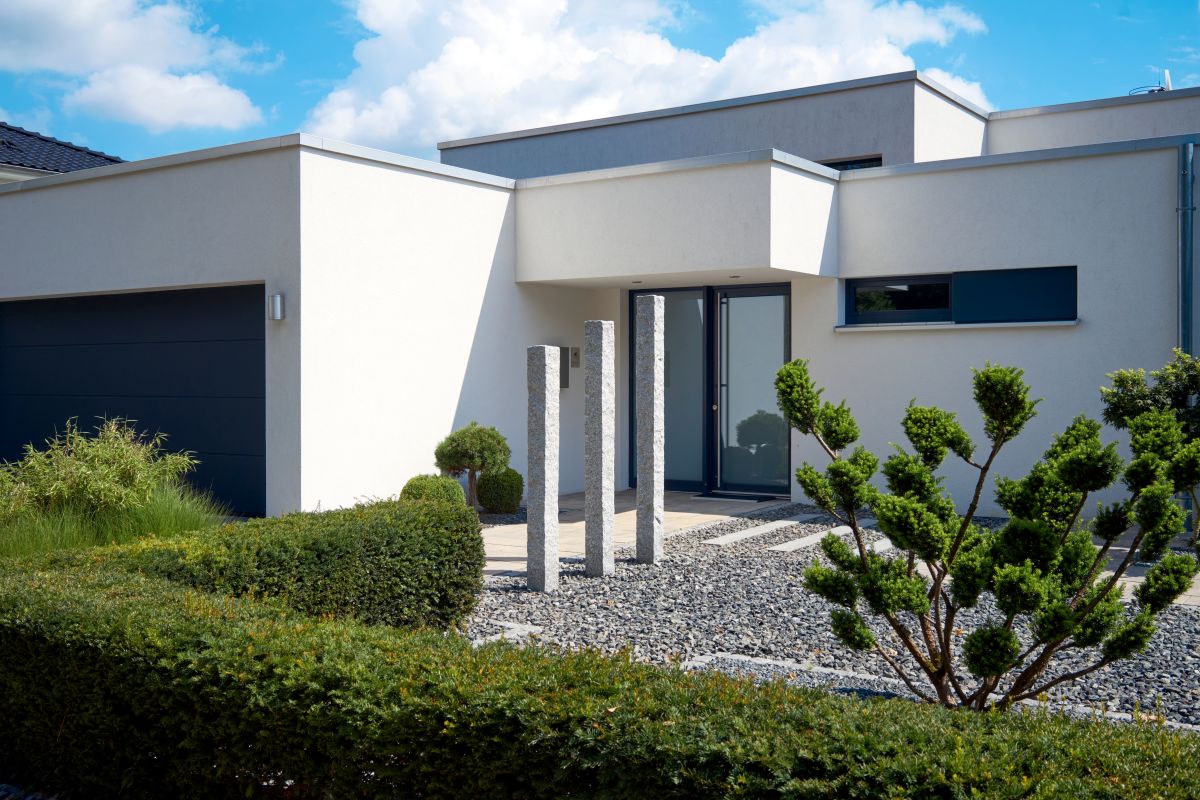
Residential Flat Roof Options: Materials, Costs & Maintenance Guide
A residential flat roof is a low-slope roof system, typically with a pitch of 2:12 or less, designed for homes with modern architecture, additions, garages, sunrooms, or rooftop deck spaces. Sometimes called low-slope roofs, flat roof systems require different materials, installation techniques, and maintenance routines than steep-sloped roofs, and choosing the right system has a major impact on lifespan, energy efficiency, and long-term cost of ownership.
In this guide, you will learn:
- The most common residential flat roof materials: A clear breakdown of TPO, EPDM, PVC, modified bitumen, and built-up roofing options.
- What a residential flat roof actually costs: Real-world price ranges and the factors that influence final installation cost.
- How to maintain a flat roof for maximum lifespan: Practical routines and warning signs that protect your investment.
Understanding Residential Flat Roofs
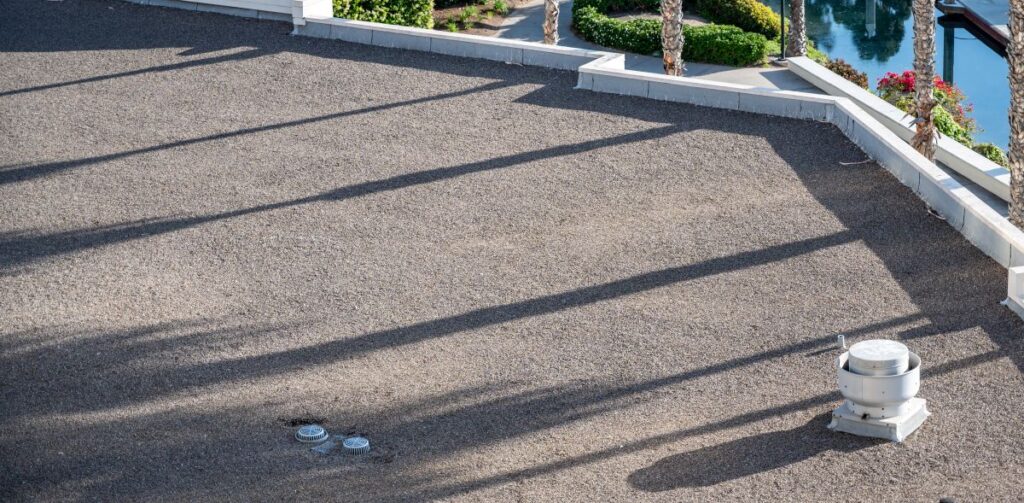
A residential flat roof offers distinct advantages and unique challenges compared to traditional pitched roofs. Understanding how flat roofs work and what makes them different helps homeowners make smart choices about materials and maintenance.
What Is a Residential Flat Roof?
A residential flat roof is a roof system with a slope of 2:12 or less, meaning the roof rises no more than 2 inches for every 12 horizontal inches. Despite the name, flat roofs are never truly flat because every flat roof has a small designed slope, typically 1/4 inch per foot, to allow water to drain toward scuppers, drains, or gutters. Flat roofs are common on modern home designs, additions, garages, sunrooms, and homes with rooftop deck spaces. They require waterproof membrane systems rather than the overlapping shingles used on steep-sloped roofs.
- Low slope design: Pitch of 2:12 or less, classified as a low-slope roof by industry standards.
- Membrane-based systems: Waterproof rolled or sheet materials rather than individual shingles.
- Designed drainage slope: Small built-in slope of about 1/4 inch per foot directs water to drainage points.
- Common applications: Modern homes, additions, garages, sunrooms, and rooftop deck installations.
How Do Flat Roofs Differ From Sloped Roofs?
Flat roofs differ from sloped roofs in drainage strategy, material requirements, lifespan expectations, and maintenance demands. Sloped roofs use gravity and overlapping shingles to shed water quickly, while flat roofs rely on membrane systems and designed drainage to manage water that may pool or move slowly across the surface. Flat roof materials must be fully waterproof rather than water-shedding, which is why specialized membranes like TPO, EPDM, and PVC dominate the category. Flat roofs also typically have shorter lifespans than premium sloped systems, though modern membranes have narrowed the gap significantly.
- Water management: Flat roofs use waterproof membranes; sloped roofs use overlapping water-shedding shingles.
- Material type: Flat roofs require single-ply or multi-ply membranes rather than individual shingles or tiles.
- Lifespan range: Residential flat roofs typically last 15 to 30 years depending on material and maintenance.
- Inspection frequency: Flat roofs benefit from twice-yearly inspections versus annual checks on sloped roofs.
5 Best Materials for a Residential Flat Roof
The best material for a residential flat roof depends on your budget, climate, expected lifespan, and how the roof space will be used. The following five materials are the most common and proven options for residential flat roof installations, each with distinct strengths and trade-offs.
1. TPO (Thermoplastic Polyolefin) Roofing
TPO is one of the most popular residential flat roof materials, valued for its white reflective surface, strong energy efficiency, and competitive pricing. According to ENERGY STAR, cool roof materials like TPO membranes reflect more of the sun’s energy back into the atmosphere, reducing cooling costs and lowering roof surface temperatures significantly compared to dark roofing materials. TPO membranes are heat-welded at the seams to create a continuous waterproof barrier, and they come in standard thicknesses of 45, 60, and 80 mil, with thicker membranes offering longer warranties and better durability.
- Energy efficiency: White reflective surface qualifies many TPO products for ENERGY STAR certification.
- Heat-welded seams: Creates a continuous waterproof bond stronger than the membrane itself.
- Lifespan range: 20 to 30 years with proper installation and routine maintenance.
- Thickness options: 45, 60, or 80 mil, with thicker membranes offering better long-term performance.
2. EPDM Rubber Roofing
EPDM (ethylene propylene diene monomer) is a synthetic rubber membrane that has protected flat roofs for more than 50 years, making it the most proven material in the category. EPDM comes in large black or white sheets, with black absorbing heat in cold climates and white reflecting heat in warm climates. The material is highly flexible, handles extreme temperature swings without cracking, and resists hail damage better than most alternatives. EPDM is installed using adhesives, fasteners, or ballast, and seams are joined with specialized tape or adhesive rather than heat welding.
- Proven track record: 50-plus years of real-world performance on residential and commercial flat roofs.
- Climate flexibility: Available in black for cold climates or white for hot climates.
- Lifespan range: 25 to 35 years with proper installation and minimal foot traffic.
- Repair friendly: Simple to patch or repair using EPDM seam tape and primer.
3. PVC (Polyvinyl Chloride) Roofing
PVC was the original heat-welded single-ply roofing membrane, and it remains a strong choice for residential flat roofs that face exposure to chemicals, grease, or extreme weather. Like TPO, PVC features a reflective white surface that reduces cooling loads in hot weather and qualifies many products for ENERGY STAR certification. PVC is exceptionally fire-resistant, holds up against ponding water better than most alternatives, and offers superior chemical resistance, making it ideal for homes near restaurants or industrial areas. PVC typically costs more than TPO upfront but often lasts longer.
- Chemical resistance: Stands up to grease, oil, and chemical exposure that degrades other membranes.
- Fire performance: Naturally fire-resistant and meets strict fire-rating requirements.
- Lifespan range: 20 to 30 years, with premium installations reaching 35-plus years.
- Ponding tolerance: Handles standing water better than most single-ply alternatives.
4. Modified Bitumen Roofing
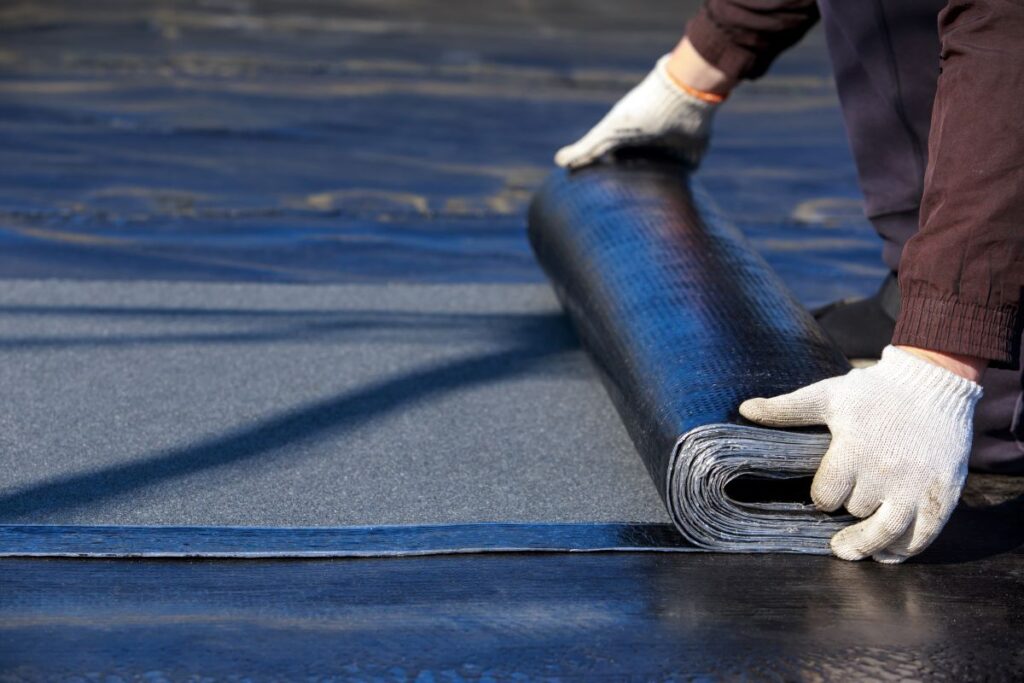
Modified bitumen is an asphalt-based membrane reinforced with polymer modifiers, installed in two or more layers for redundant waterproofing protection. Modern modified bitumen products are typically installed using torch-down, cold-adhesive, or self-adhering peel-and-stick methods, each offering different trade-offs for safety, speed, and longevity. The multi-layer construction provides excellent puncture resistance and tolerates moderate foot traffic, making it a good fit for residential flat roofs that double as deck spaces or HVAC platforms. Modified bitumen also comes in granular surfaces that improve UV resistance and aesthetics.
- Multi-layer protection: Two or more reinforced layers provide redundant waterproofing.
- Puncture resistance: Stands up to foot traffic, hail, and falling debris better than thin single-ply membranes.
- Lifespan range: 15 to 25 years with proper installation and maintenance.
- Installation options: Available in torch-down, cold-adhesive, or self-adhering peel-and-stick formats.
5. Built-Up Roofing (BUR)
Built-up roofing is the traditional flat roof system, often called tar and gravel, consisting of alternating layers of asphalt or coal tar and reinforcing fabric, finished with a layer of gravel or mineral cap sheet. BUR has protected commercial and residential flat roofs for more than a century and remains a reliable choice when long lifespan and proven performance matter more than modern features. The multi-ply construction is exceptionally durable, fire-resistant, and capable of handling heavy foot traffic. BUR is heavier than single-ply membranes and requires a structurally sound roof deck.
- Proven durability: A century of real-world performance backs the BUR system.
- Fire resistance: Gravel surface and asphalt construction provide excellent fire protection.
- Lifespan range: 15 to 30 years depending on the number of plies and the gravel surface.
- Heavy construction: Requires a roof deck rated for the added weight of multiple plies and gravel.
How Much Does a Residential Flat Roof Cost?
A residential flat roof typically costs $4 to $15 per square foot installed, depending on the material, roof size, and complexity of the installation. Understanding the cost ranges and what drives final pricing helps homeowners budget accurately and compare contractor estimates on an apples-to-apples basis.
What Is the Cost Range for Each Flat Roof Material?
The cost range for each residential flat roof material varies based on membrane thickness, installation method, and labor in your area. TPO and EPDM tend to be the most affordable, while PVC and built-up roofing sit at the higher end of the price scale. Modified bitumen falls in the middle, offering a balance of cost and durability. Homeowners should always request multiple written estimates and confirm material specifications before committing to a contractor.
- TPO membrane: Typically $5 to $10 per square foot installed for residential applications.
- EPDM rubber: Generally $4 to $9 per square foot installed depending on thickness and installation method.
- PVC membrane: Usually $7 to $13 per square foot installed, with premium thicknesses costing more.
- Modified bitumen: Often $5 to $11 per square foot installed across torch-down and peel-and-stick options.
- Built-up roofing: Commonly $7 to $15 per square foot installed due to multi-ply construction.
What Factors Affect Residential Flat Roof Pricing?
Several factors affect residential flat roof pricing, including roof size, material thickness, deck condition, drainage requirements, and labor rates in your region. A larger roof reduces the per-square-foot cost because crews work more efficiently on continuous expanses. Hidden damage to the existing deck, the need for additional insulation, and complex drainage modifications all add to the final price. Tear-off of an existing roof versus installation over the current system also significantly affects total cost.
- Roof size: Larger flat roofs benefit from lower per-square-foot pricing due to crew efficiency.
- Tear-off requirements: Removing an existing roof adds labor and disposal costs.
- Deck repairs: Damaged or rotted decking must be replaced before the new membrane goes on.
- Drainage upgrades: New scuppers, drains, or tapered insulation systems add to the overall cost.
How to Maintain a Residential Flat Roof
A well-maintained residential flat roof can last decades, while a neglected one often fails years ahead of schedule. Routine maintenance is the single most cost-effective way to protect your investment and extend the life of any flat roof system.
What Routine Maintenance Does a Flat Roof Need?
A residential flat roof needs twice-yearly professional inspections, regular debris removal, drainage clearing, and prompt repair of any small issues before they become major problems. Spring and fall inspections catch the damage left by winter weather and the wear caused by summer UV exposure. Debris like leaves, branches, and trash should be cleared monthly because anything that traps moisture against the membrane accelerates wear. Drains, scuppers, and gutters need to stay clear so water can move off the roof as designed.
- Twice-yearly inspections: Schedule professional roof inspections every spring and fall.
- Debris removal: Clear leaves, branches, and trash from the roof surface and drainage points monthly.
- Drain maintenance: Keep drains, scuppers, and downspouts free of debris year-round.
- Prompt repairs: Address punctures, seam separations, and flashing issues as soon as they appear.
What Are the Most Common Residential Flat Roof Problems?
The most common residential flat roof problems include ponding water, membrane punctures, seam separation, flashing failure, and drainage issues. Ponding water occurs when standing water remains on the roof more than 48 hours after rain, which accelerates membrane breakdown and can void manufacturer warranties. Punctures and seam separations often start small but allow water into the underlying insulation and deck, leading to costly hidden damage. Flashing failures at edges, penetrations, and walls are responsible for a significant percentage of all flat roof leaks.
- Ponding water: Standing water that lingers more than 48 hours indicates drainage problems requiring correction.
- Membrane punctures: Foot traffic, dropped tools, and falling branches can puncture single-ply membranes.
- Seam separation: Heat-welded or taped seams can fail over time, especially with poor installation.
- Flashing failure: Compromised flashing around vents, walls, and edges is a leading source of flat roof leaks.
Frequently Asked Questions About Residential Flat Roofs
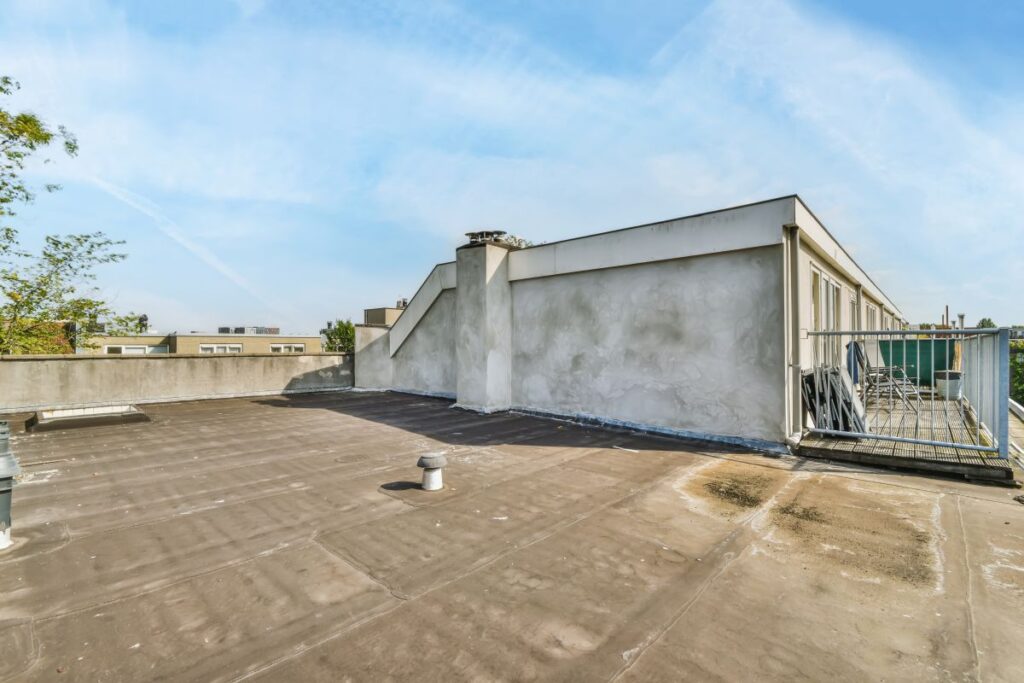
How Long Does a Residential Flat Roof Last?
A residential flat roof typically lasts 15 to 35 years depending on the material, installation quality, and maintenance routine. EPDM rubber and high-quality PVC systems often reach the upper end of that range, while standard TPO and modified bitumen typically deliver 20 to 25 years of reliable service. Routine inspections and prompt repairs are the most reliable way to push your flat roof toward maximum lifespan.
Are Residential Flat Roofs Prone to Leaks?
Residential flat roofs are not inherently more prone to leaks than sloped roofs when properly installed and maintained, but they do require closer attention to seams, flashing, and drainage. The biggest leak risks come from poor installation, neglected maintenance, and damaged flashing rather than the flat design itself. Modern single-ply membranes like TPO, PVC, and EPDM offer excellent leak resistance when installed by certified contractors.
Can You Walk on a Residential Flat Roof?
You can walk on most residential flat roofs for inspections and maintenance, but limit foot traffic to avoid wear and protect the membrane. Single-ply membranes can be punctured by sharp objects or excessive pressure, so use walk pads, soft-soled shoes, and designated paths whenever possible. Roof decks designed for living space use heavier-duty assemblies with protective walkway systems.
Do Residential Flat Roofs Need a Slight Slope?
Yes, every residential flat roof needs a slight slope, typically 1/4 inch per foot, to allow water to drain toward scuppers, drains, or gutters. A truly flat roof would trap water and fail prematurely from ponding damage. The designed slope is usually invisible to the eye but essential for the long-term performance of any flat roof system.
Are Flat Roofs More Expensive Than Pitched Roofs?
Flat roofs are generally less expensive than pitched roofs per square foot of material, but the total cost difference depends on roof size, material choice, and labor in your area. Single-ply membrane systems like TPO and EPDM often deliver strong value at the lower end of the cost range, while built-up roofing and premium PVC can rival or exceed the cost of mid-range pitched roof systems. The right comparison considers lifespan, energy efficiency, and maintenance costs over the full life of the roof.
Trust Alpine Roofing for Your Residential Flat Roof Installation and Maintenance
When it comes to a residential flat roof, the difference between a system that lasts decades and one that fails early often comes down to the materials chosen and the precision of the installation. Alpine Roofing brings deep expertise across every major flat roof system, including TPO, EPDM, PVC, modified bitumen, and built-up roofing, so homeowners get a recommendation matched to their specific home, climate, and budget.
Whether you are planning a new flat roof installation, considering a replacement, or simply want a professional inspection of your existing system, our team has the experience and certifications to deliver lasting results. Contact Alpine Roofing today for a free estimate and expert guidance on choosing the right residential flat roof for your home.
Fresh From Our Blog


Happy Roof, Happy Home


