




How Much Does It Cost to Fix a Roof Leak? (2026 Pricing Breakdown)
The answer to “how much does it cost to fix a roof leak” in 2026 ranges from $150 for a minor shingle or pipe boot repair to over $3,000 for major flashing, valley, or decking work, with the national average landing around $900 to $1,150 for a typical residential roof repair. The wide range reflects the reality that not all leaks are equal, and the source, size, and severity of the leak drive the final cost more than any other factor.
In this guide, you will learn:
- 2026 cost ranges by leak type: Real pricing for the most common roof leak repairs homeowners face today.
- What drives the final cost of your repair: The specific factors that move pricing up or down for any roof leak job.
- When repair makes sense and when replacement is smarter: A clear framework for choosing between fixing a leak and starting fresh.
Understanding Roof Leak Repair Costs in 2026
Roof leak repair costs in 2026 reflect rising material prices, higher labor rates, and increased demand following major storm seasons across the country. Knowing the typical price ranges helps homeowners budget realistically and spot estimates that fall outside reasonable bounds.
What Is the Average Cost to Fix a Roof Leak in 2026?
The average cost to fix a roof leak in 2026 is approximately $900 to $1,150, with most homeowners paying between $350 and $1,500 for a professional repair. According to Angi’s 2026 cost data, roof leak repairs typically range from $700 to $3,000, with $900 representing the most common total cost across the U.S. market. Minor repairs like a single missing shingle or a worn pipe boot can come in under $300, while complex leaks involving flashing, decking damage, or premium materials often push past $2,000. Emergency calls during storms or after-hours service add $200 to $500 on top of the base repair cost.
- Minor repairs: Typically $150 to $400 for small fixes like missing shingles or worn pipe boots.
- Moderate repairs: Usually $500 to $1,500 for flashing work, larger leaks, or partial section replacement.
- Major repairs: Often $1,500 to $3,000 or more for decking damage, valley work, or structural issues.
- Emergency surcharges: Add $200 to $500 for storm-event service calls or after-hours appointments.
Why Does Roof Leak Repair Cost Vary So Much?
Roof leak repair cost varies so much because every leak has a unique combination of source, severity, location, and underlying damage that all influence the final price. A leak from a worn rubber pipe boot might cost a few hundred dollars to fix, while a chimney flashing failure that has soaked the decking for months could exceed $2,000 once damaged materials are replaced. Roofing material type, roof pitch, accessibility, and labor rates in your region all add or subtract from the base repair cost. The honest answer to a cost question is almost always “it depends on what we find,” which is why a written estimate after inspection matters.
- Leak source: Shingle, flashing, valley, and decking leaks all carry different price ranges.
- Hidden damage: Decking rot, wet insulation, and mold issues add significant cost once revealed.
- Roof material: Tile, slate, and metal repairs cost more than standard asphalt shingle work.
- Regional pricing: Labor rates vary substantially by metro area and seasonal demand.
6 Common Roof Leak Repairs and Their 2026 Costs
The most common roof repairs each carry a typical 2026 price range that helps homeowners benchmark estimates and budget appropriately. The following six categories cover the vast majority of residential roof leak repairs, from quick fixes to multi-day jobs.
1. Missing or Damaged Shingles
Replacing missing or damaged shingles is the most common and least expensive roof leak repair, typically costing $150 to $600 for a localized fix on an asphalt roof. The price depends on how many shingles need replacement, whether matching shingles are still available, and how easily a contractor can access the work area. Older roofs often present a color-matching challenge because shingles fade over time and discontinued product lines may no longer be available. A quality contractor will keep extra shingles from the original installation when possible to make future repairs seamless.
- Single shingle replacement: Typically $150 to $300 for an easy-access, single-shingle repair.
- Multiple shingle replacement: Usually $300 to $600 when several shingles need attention.
- Matching challenges: Older roofs may require color-blending or section replacement for visual consistency.
- Premium materials: Designer or specialty shingles cost more per piece than standard architectural shingles.
2. Pipe Boot or Vent Pipe Repairs
Pipe boot leaks are one of the most common sources of roof leaks, and the repair typically costs $250 to $600 for a standard rubber boot replacement. The rubber collar around plumbing vent pipes degrades over time from UV exposure, eventually cracking and allowing water to enter the home along the pipe. Newer lifetime boots and metal storm collars offer longer-lasting alternatives that justify the slightly higher upfront cost. Steeper roofs or hard-to-access vent pipes can push the cost toward the higher end of the range or beyond.
- Standard rubber boot: Typically $250 to $400 for a straightforward replacement on a standard pitch roof.
- Lifetime or metal boot upgrade: Usually $400 to $700 for premium materials with extended warranties.
- Steep roof surcharge: Often $100 to $300 extra for steep-pitch or hard-to-access vent locations.
- Multiple boots: Many homes have 3-5 pipe boots, with bundled replacement reducing per-unit cost.
3. Flashing Repairs (Chimney, Skylight, Wall)
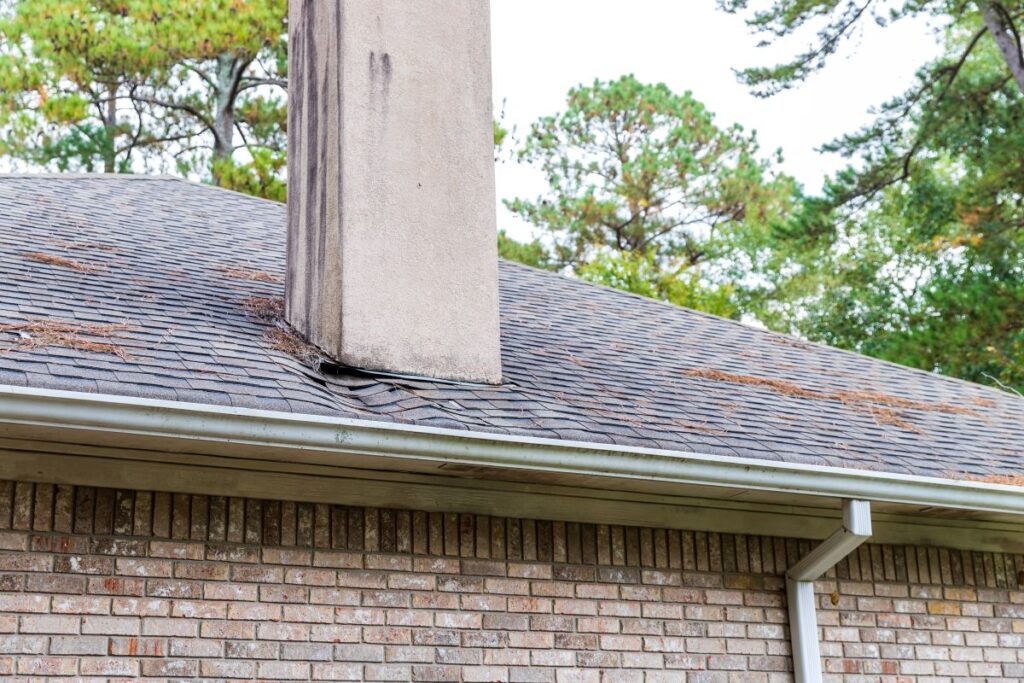
Flashing leaks are the leading cause of roof leaks on most homes, and repair costs typically range from $300 to $1,500 depending on the location and complexity. Chimney flashing replacement often runs $400 to $1,200, skylight flashing repairs come in around $300 to $800, and wall flashing where the roof meets a vertical surface can range from $400 to $1,500. Complete chimney rebuilds or step flashing replacement on long wall runs can exceed $2,000. Quality flashing work requires removing surrounding shingles, installing new metal flashing properly, and re-roofing the affected area.
- Chimney flashing: Typically $400 to $1,200 for re-flashing around a standard masonry chimney.
- Skylight flashing: Usually $300 to $800 for re-flashing around an existing skylight unit.
- Wall and step flashing: Often $400 to $1,500 depending on the length of the affected wall.
- Complete flashing replacement: Can exceed $2,000 when extensive shingle work is also required.
4. Roof Valley Leaks
Roof valley repairs cost $300 to $1,500 on average, with prices varying based on the length of the valley, the type of valley flashing, and how much surrounding shingle work is needed. Roof valleys collect more water than any other part of the roof, making them prone to leaks when flashing fails or debris causes water to back up under shingles. Open metal valleys generally cost less to repair than closed-cut or woven valleys because they are easier to access and re-flash. Severe valley damage involving wet decking can push costs significantly higher.
- Minor valley repair: Typically $300 to $700 for re-sealing or replacing a short section.
- Full valley re-flashing: Usually $700 to $1,500 for replacing the metal valley flashing.
- Closed-cut valleys: Often more expensive to repair due to the integrated shingle weave.
- Decking damage: Adds $500 to $1,500 when valley leaks have rotted the underlying deck.
5. Ice Dam Damage Repairs
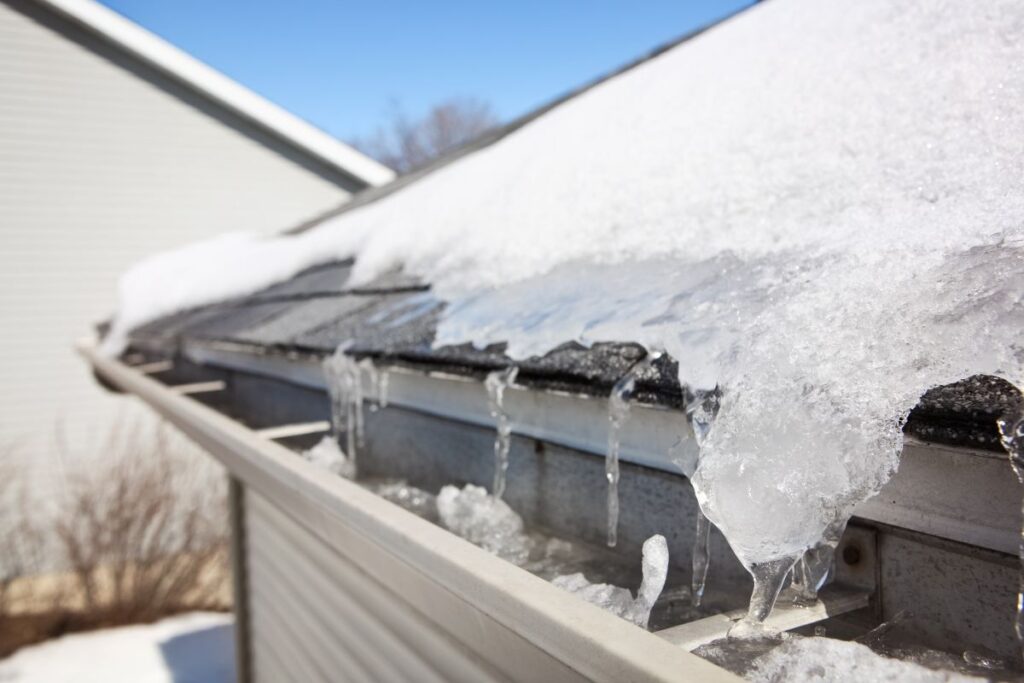
Ice dam damage repairs cost $500 to $3,000 depending on the extent of the damage to shingles, underlayment, decking, and interior surfaces. Ice dams form when snow melts and refreezes at the eaves, forcing water back under shingles and into the home. The visible damage on the roof is often just the start, as water that has worked under shingles can soak insulation, drywall, and framing inside the home. Comprehensive repair often requires replacing shingles, installing ice-and-water shield along the eaves, and addressing ventilation issues that contributed to the original ice dam.
- Shingle replacement: Typically $500 to $1,200 for replacing damaged shingles along the eaves.
- Underlayment and ice shield: Usually $400 to $1,000 to install proper ice-and-water barrier protection.
- Ventilation upgrades: Often $300 to $1,000 to improve attic ventilation and prevent future ice dams.
- Interior damage: Adds $500 to $3,000 for drywall, insulation, and ceiling repairs inside the home.
6. Roof Decking Replacement
Roof decking replacement costs $70 to $400 per sheet of plywood or OSB, with most leak-related decking jobs running $500 to $2,500 once labor and surrounding shingle work are included. Wet, rotted decking is often discovered only after shingles are removed for another repair, which is why honest contractors include language in their estimates about potential additional charges if rotten decking is found. Replacing decking promptly prevents the rot from spreading and protects the structural integrity of the roof system.
- Single sheet replacement: Typically $70 to $200 per 4×8 sheet of plywood or OSB.
- Small section repair: Usually $500 to $1,200 when 1-3 sheets need replacement.
- Larger area replacement: Often $1,500 to $2,500 for 5-10 sheets with surrounding shingle work.
- Hidden until exposed: Decking damage is typically found only after the roof surface is opened.
What Factors Affect the Cost to Fix a Roof Leak?
Several factors affect the cost to fix a roof leak beyond the leak source itself, including roofing material, roof pitch, accessibility, and regional labor rates. Understanding these variables helps homeowners interpret estimates and compare contractors fairly.
How Does Roofing Material Affect Repair Cost?
Roofing material affects repair cost significantly, with asphalt shingles being the most affordable to repair and tile, slate, and metal carrying premium pricing. Asphalt repairs benefit from widely available materials, abundant skilled labor, and quick installation, while specialty materials require contractors with specific experience and harder-to-source components. Replacing a single tile can cost $60 to $125, while a single asphalt shingle costs a fraction of that amount. Metal roof repairs are uncommon enough that local pricing can vary widely between contractors.
- Asphalt shingles: The most affordable to repair, with widely available materials and skilled labor.
- Tile (concrete or clay): Higher per-unit cost and specialized labor push repairs to premium pricing.
- Slate: Among the most expensive to repair due to material cost and specialized installation needs.
- Metal roofing: Repair costs vary widely based on panel type, age, and contractor experience.
How Do Roof Access and Pitch Affect Repair Pricing?
Roof access and pitch affect repair pricing through labor hours, safety equipment requirements, and crew sizing. Steep roofs above 8:12 pitch require fall protection systems, slower work pace, and often a larger crew, which all add to the final bill. Multi-story homes, tight property lines, and limited driveway access for material delivery can also push costs higher. A single-story home with easy ground-level ladder access will always cost less to repair than a three-story home with a steep roof and no nearby driveway access.
- Steep pitch: Roofs above 8:12 typically add 25 to 50 percent to standard repair labor costs.
- Multi-story homes: Two and three-story homes require longer ladders, safety gear, and slower work.
- Limited access: Tight lot lines and difficult material delivery routes add labor and equipment cost.
- Crew safety requirements: OSHA fall protection on steep or high roofs increases labor time and cost.
When to Repair vs. Replace a Leaking Roof
Knowing when to repair versus replace a leaking roof is one of the most important decisions a homeowner can make. The right answer depends on the age of the roof, the extent of the damage, and the long-term economics of repeated repairs versus a full replacement.
When Does Roof Repair Make Sense?
Roof repair makes sense when the roof is less than 15 to 20 years old, the damage is localized, and the rest of the roof system shows good condition. A single leak on an otherwise healthy roof is almost always worth repairing rather than replacing the entire system. Recent installations with active warranties should always be repaired first, since premature replacement could void the warranty and waste years of remaining roof life. The key is matching the repair investment to the realistic remaining lifespan of the roof.
- Younger roof age: Roofs under 15 years are typically good candidates for targeted repair.
- Localized damage: Single leak sources rather than widespread issues across the roof.
- Good overall condition: Remaining shingles show healthy granules, no widespread curling or cracking.
- Active warranty: Recent installations should be repaired to preserve warranty coverage.
When Is Full Roof Replacement the Better Investment?
Full roof replacement is the better investment when the roof is over 20 years old, multiple leaks have appeared, widespread granule loss is visible, or repeated repairs have added up to a significant portion of replacement cost. A 25-year-old roof with multiple leaks is almost always a better candidate for replacement than continued repair, because each new leak is a sign of widespread material failure. The 50 percent rule offers a useful guideline: if repair costs approach 50 percent of replacement cost, replacement is usually the smarter choice.
- Roof age over 20 years: Aging roofs near end of life are better replaced than repeatedly repaired.
- Multiple leak sources: Several leaks across the roof indicate system-wide failure.
- Widespread granule loss: Bare spots and significant granule accumulation in gutters signal end of life.
- The 50 percent rule: Repair costs approaching half the replacement cost favor full replacement.
Frequently Asked Questions About Roof Leak Repair Cost
How Much Does an Emergency Roof Leak Repair Cost?
An emergency roof leak repair typically costs 25 to 50 percent more than a standard scheduled repair, with after-hours or weekend service adding $200 to $500 to the base price. Emergency tarping to stop active water intrusion runs $200 to $700 on its own, separate from the permanent repair that follows. Most contractors charge premium rates for storm-event and after-hours work because of overtime labor and the increased complexity of working in poor weather.
Will Homeowners Insurance Cover My Roof Leak Repair?
Homeowners insurance typically covers roof leak repair when the leak results from a sudden, accidental event like wind, hail, or fallen tree damage. Insurance usually does not cover leaks caused by age, wear and tear, or lack of maintenance. The deductible on most policies is $1,000 to $2,500, which often exceeds the cost of minor repairs, making small leaks an out-of-pocket expense even for covered events.
Can I Fix a Small Roof Leak Myself?
You can attempt to fix a small roof leak yourself in some cases, but DIY repairs come with safety risks and often miss underlying issues that a professional would catch. Replacing a single shingle or applying a temporary patch may save money short-term, but improper repairs can void manufacturer warranties and lead to larger problems. Most experts recommend hiring a licensed roofing contractor for any leak repair to ensure the work is done safely and correctly.
How Long Does a Roof Leak Repair Take?
A roof leak repair typically takes 1 to 4 hours for minor work like shingle or pipe boot replacement, while complex repairs involving flashing or decking can take a full day or more. Weather conditions, crew size, and the extent of hidden damage all influence the actual timeline. Most contractors complete standard residential leak repairs in a single visit, weather permitting.
How Quickly Should I Repair a Roof Leak?
You should repair a roof leak as quickly as possible, ideally within days of discovering it, because water damage compounds rapidly once it starts. A small leak left for weeks can soak insulation, rot decking, damage drywall, and feed mold growth, turning a $400 repair into a multi-thousand-dollar restoration. Temporary tarping after the first storm and prompt professional repair are the best ways to limit overall damage.
Trust Alpine Roofing for Affordable, Expert Roof Leak Repair
When it comes to how much does it cost to fix a roof leak, the difference between a fair price and an inflated bill often comes down to the contractor you choose. Alpine Roofing provides honest, detailed written estimates, clear explanations of what your repair requires, and skilled craftsmanship that solves the problem the first time.
Our team has the experience to diagnose tricky leaks, the integrity to give you a fair price, and the local presence to stand behind every repair we make. Contact Alpine Roofing today for a free estimate and detailed estimate on your roof leak repair.
Live in the Inland Northwest? See local pricing, common failure points, and what to expect from our roof repair service in Spokane, WA.
Fresh From Our Blog


Happy Roof, Happy Home


