



How Long Does a Roof Last? Lifespan by Material (2026)
The answer to “how long does a roof last” depends almost entirely on the material used, ranging from as short as 15 years for basic 3-tab asphalt shingles to well over 100 years for slate. Choosing the right roofing material for your home means balancing upfront cost, ongoing maintenance, expected ownership timeline, and the climate demands of your specific region, and the lifespan differences between materials can span nearly a full century.
In this guide, you will learn:
- What determines how long a roof lasts: The key factors that affect real-world lifespan regardless of material choice.
- The expected lifespan of 7 common roofing materials: A clear breakdown of asphalt, metal, wood, tile, slate, and composite options.
- How to tell when your roof is nearing the end of its life: The signs that indicate replacement is coming and when to call a professional.
Understanding Roof Lifespan Factors
Roof lifespan is not a fixed number for any material because installation quality, climate, maintenance, and ventilation all influence how long a roof actually lasts in real-world conditions. Understanding what drives lifespan helps homeowners maximize the value of their roofing investment regardless of which material they choose.
What Determines How Long a Roof Lasts?
The factors that determine how long a roof lasts include material type, installation quality, climate exposure, attic ventilation, and ongoing maintenance. Material type sets the theoretical maximum lifespan, but the other factors determine how close a specific roof gets to that maximum. A quality architectural asphalt shingle installed correctly on a properly ventilated home in a moderate climate can last 30 years, while the same shingle installed poorly on an under-ventilated home in a harsh climate might fail in 15 years. Regular inspections and prompt repairs can add 5 to 10 years to almost any roof type.
- Material choice: Sets the theoretical maximum lifespan, from 20 years for basic asphalt to 100+ for slate.
- Installation quality: Poor installation can cut expected lifespan in half regardless of material.
- Attic ventilation: Proper airflow prevents heat and moisture damage that accelerates aging.
- Climate exposure: UV, wind, hail, snow load, and temperature swings all affect longevity.
- Maintenance routine: Regular inspection and prompt small repairs extend usable roof life by years.
How Are Roof Lifespan Estimates Measured?
Roof lifespan estimates come from industry testing, home inspector data, and manufacturer performance research collected over decades of real-world installations. According to InterNACHI’s Standard Estimated Life Expectancy Chart for Homes, roofing material life expectancies range from around 20 years for basic 3-tab asphalt shingles to lifetime performance for slate, copper, and clay tile installations. These figures assume proper installation, adequate ventilation, and reasonable maintenance across the roof’s service life. Actual performance in any specific installation may differ based on the factors described above.
- Home inspector data: InterNACHI compiles life expectancy data from thousands of real-world inspections.
- Manufacturer testing: Product warranties reflect lab testing under controlled conditions.
- Real-world performance: Actual lifespans typically fall within the published estimated ranges.
- Regional adjustments: Coastal and severe-weather regions often see shorter service life across all materials.
7 Roofing Materials and Their Expected Lifespans
The 7 most common roofing materials for residential homes are 3-tab asphalt shingles, architectural asphalt shingles, metal roofing, wood shakes and shingles, clay and concrete tile, slate, and composite or synthetic roofing. Each material offers a different combination of upfront cost, expected lifespan, and long-term value.
1. 3-Tab Asphalt Shingles (15 to 20 Years)
3-Tab asphalt shingles are the shortest-lived residential roofing option, with typical real-world lifespans of 15 to 20 years in most climates. Manufacturer warranties on 3-tab shingles typically run 20 to 25 years, but actual service life often falls short of the warranty due to the single-layer construction and lower material quality. Basic 3-tab shingles perform best in moderate climates without extreme UV, wind, or hail exposure, and they remain a budget option for rental properties, outbuildings, or short-term ownership situations.
- Expected lifespan: 15 to 20 years in most residential installations.
- Warranty coverage: Typically 20 to 25 years, though real-world performance runs shorter.
- Cost advantage: Lowest upfront material and installation cost of any modern roofing option.
- Weakness: Poor wind and impact resistance limits use in storm-prone regions.
2. Architectural Asphalt Shingles (25 to 30 Years)
Architectural asphalt shingles significantly outlast 3-tab shingles thanks to their laminated multi-layer construction, delivering typical real-world lifespans of 25 to 30 years. Premium architectural products with Class 4 impact ratings and reinforced nailing zones can extend service life toward 40 years under ideal conditions. Manufacturer warranties on architectural shingles commonly run 30 years to lifetime, with the lifetime designation typically capping at 50 years of prorated coverage. Architectural shingles are the most-installed residential roofing type in the United States by a wide margin.
- Expected lifespan: 25 to 30 years for most installations, up to 40 for premium products.
- Warranty coverage: 30-year to lifetime limited coverage on major brands.
- Impact upgrades: Class 4 impact-rated products deliver better hail resistance and insurance discounts.
- Popularity: The dominant residential roofing choice across the U.S. market.
3. Metal Roofing (40 to 70 Years)
Metal roofing delivers exceptional longevity, with steel and aluminum systems typically lasting 40 to 70 years and copper or zinc options reaching 100 years or more. Standing seam metal roofs are the longest-lasting metal option because their concealed fasteners eliminate the leak paths that shorten exposed-fastener panel life. Metal roofs also perform exceptionally well against wind, hail, snow, and fire, making them a strong choice for severe-weather regions. The higher upfront cost is offset by service life that typically replaces two or three asphalt shingle installations over the same period.
- Steel and aluminum: 40 to 70 years typical service life on standing seam systems.
- Copper and zinc: 100+ years with proper installation and normal maintenance.
- Warranty performance: Most metal roofs outlast their initial 30 to 50 year warranty.
- Long-term value: One metal installation typically replaces two to three asphalt roofs.
4. Wood Shakes and Shingles (25 to 30 Years)
Wood shakes and shingles offer distinctive natural beauty and reasonable longevity, with typical lifespans of 25 to 30 years for cedar and other premium woods. Wood roofing requires more maintenance than any other material category, with regular cleaning, treatment for moss and rot, and prompt replacement of damaged shakes essential to reaching the expected lifespan. Wood shakes are prohibited or restricted in wildfire-prone regions because of their combustibility, and homeowners insurance premiums are sometimes higher for wood roofs. In moderate climates with active maintenance, wood roofs can last 30 to 40 years.
- Expected lifespan: 25 to 30 years for cedar in most climates.
- Maintenance intensive: Regular cleaning and treatment required to reach expected lifespan.
- Fire restrictions: Prohibited or restricted in many wildfire-prone areas.
- Insurance considerations: Sometimes carries higher homeowners insurance premiums.
5. Clay and Concrete Tile (50 to 100 Years)
Clay and concrete tile roofs are among the longest-lasting residential roofing options, with typical lifespans of 50 to 100 years or more when properly installed. Clay tile has been used for centuries on structures worldwide and routinely reaches its full expected lifespan without material replacement, though the underlayment beneath tile typically needs replacement every 20 to 30 years. Concrete tile is a more affordable alternative to clay with similar longevity, though slightly heavier weight requirements. Both tile types perform exceptionally well against fire, hail, and thermal cycling, but require adequate structural framing to support the weight.
- Clay tile lifespan: 100 years or more with proper installation and underlayment maintenance.
- Concrete tile lifespan: 50 to 75 years for most residential installations.
- Underlayment cycle: The material beneath tile needs replacement every 20 to 30 years.
- Structural requirement: Both materials require framing designed for the additional weight.
6. Slate Roofing (75 to 150 Years)
Slate is the longest-lasting residential roofing material available, with hard slate installations routinely reaching 100 to 150 years or more of service life. Slate roofs installed in the 1800s remain functional on many historic homes across the eastern United States, and the material itself often outlasts the homes it protects. Soft slate has a shorter lifespan of 50 to 100 years, still exceeding almost every other roofing option available. The high upfront cost, specialized installation requirements, and heavy weight limit slate to premium homes with adequate structural support, but no other material matches its longevity.
- Hard slate: 100 to 150+ years typical service life with proper installation.
- Soft slate: 50 to 100 years, still longer than most alternative materials.
- Historic proof: Slate roofs from the 1800s remain functional across the eastern U.S.
- Structural demand: Heavy weight requires framing designed for slate installations.
7. Composite and Synthetic Roofing (30 to 50 Years)
Composite and synthetic roofing materials, including engineered slate, synthetic shake, and polymer-based products, deliver typical lifespans of 30 to 50 years while replicating the appearance of natural materials. Synthetic slate offers most of the aesthetic appeal of real slate at a fraction of the cost and weight, while synthetic shake replaces cedar wood in wildfire-prone regions without the fire risk. Composite products often carry 50-year limited warranties from major manufacturers, and their lighter weight allows installation on standard framing designed for asphalt shingles.
- Expected lifespan: 30 to 50 years for most composite and synthetic products.
- Aesthetic match: Replicates slate or shake appearance at significantly lower cost.
- Weight advantage: Lighter than natural slate or tile, allowing installation on standard framing.
- Fire safety: Synthetic shake offers cedar-look aesthetics without the wildfire risk.
Signs Your Roof Is Reaching the End of Its Lifespan
Even the longest-lasting roof shows warning signs before it fails completely, and recognizing these signs early lets homeowners plan replacement rather than face an emergency. Knowing what to look for protects both your budget and your home.
What Are the Visible Signs Your Roof Needs Replacement?
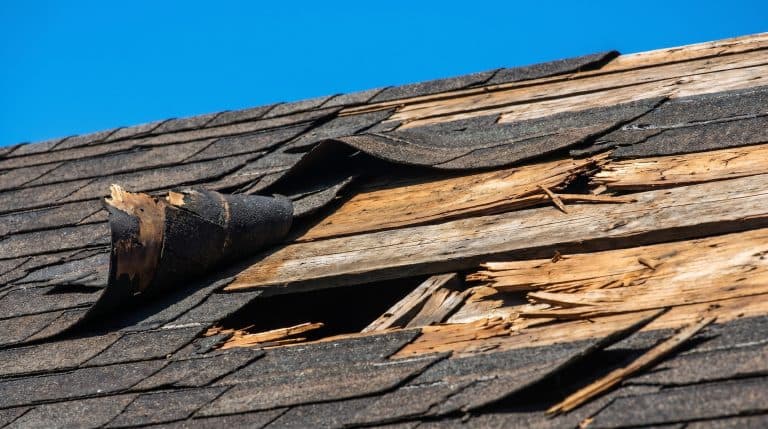
The visible signs your roof needs replacement include curling or buckling shingles, granule loss visible in gutters, exposed underlayment, sagging rooflines, and interior water stains. Individual missing shingles can often be repaired, but widespread visible damage across the roof typically signals end-of-life. Age alone is also a factor: asphalt roofs approaching 20 years, wood roofs approaching 25 years, and metal roofs approaching 50 years all warrant closer inspection even without visible damage. A roof at or beyond its expected lifespan needs professional assessment even if it appears to be performing.
- Curling or buckling shingles: Widespread shape distortion indicates end-of-life on asphalt roofs.
- Granule accumulation: Heavy granule deposits in gutters signal accelerated shingle aging.
- Sagging rooflines: Any visible dip or wave suggests structural damage requiring immediate attention.
- Interior water stains: Fresh ceiling stains often indicate the roof has reached failure.
- Age at or beyond expected lifespan: Time alone is reason enough for professional inspection.
When Should You Get a Professional Assessment?
You should get a professional roof assessment when your roof approaches or exceeds its expected lifespan, when you notice any of the visible warning signs, after any major storm event, or before purchasing or selling a home. Professional roofers have the safety equipment, training, and documented inspection protocols that reveal issues homeowners cannot spot from the ground. A written inspection report also supports insurance claims, warranty requirements, and real estate transactions. Most reputable contractors offer free assessments, making professional inspection a low-risk investment in knowing your actual roof condition.
- Age-based inspection: Schedule when the roof approaches its expected lifespan by material.
- Post-storm assessment: Any major wind, hail, or storm event warrants professional inspection.
- Real estate transactions: Get professional documentation before buying or selling.
- Warning sign response: Any visible signs of aging deserve immediate professional attention.
Frequently Asked Questions About Roof Lifespan
Can You Extend the Life of Your Roof?
You can extend the life of your roof by 5 to 10 years or more through regular professional inspections, prompt small repairs, proper attic ventilation, and consistent debris and moss removal. Manufacturer warranties often require documented maintenance to remain valid, which makes routine care a financial protection as well as a practical one. The cost of maintenance is a small fraction of the cost of premature replacement.
What Roofing Material Lasts the Longest?
Slate roofing lasts the longest of any residential roofing material, with hard slate installations routinely reaching 100 to 150 years or more. Copper metal roofing is a close second at 100+ years, followed by clay tile at 50 to 100 years. Standing seam steel and aluminum metal roofing delivers 40 to 70 years of service, making metal the best combination of longevity and affordability.
How Do I Know My Roof’s Actual Age?
You can determine your roof’s actual age through home purchase records, previous contractor invoices, city permit records, or attic inspection for date-stamped materials. Real estate disclosures during purchase often include roof age, and municipal building permits for prior roof work are typically public record. If none of these sources works, a professional inspector can often estimate roof age within a 5-year range based on material condition and installation techniques.
Does Homeowners Insurance Cover Roof Replacement Due to Age?
No, homeowners insurance does not cover roof replacement due to age or normal wear and tear. Insurance typically covers sudden accidental damage from wind, hail, fire, or falling debris, but replacement due to aging or lack of maintenance falls to the homeowner. Some insurers reduce coverage or refuse renewal on roofs beyond a certain age, which makes proactive replacement planning important for older homes.
Is a Roof Warranty the Same as Expected Lifespan?
No, a roof warranty is not the same as expected lifespan. Warranties reflect the manufacturer’s coverage period for material defects, while lifespan reflects real-world performance in normal conditions. Many warranties are prorated after the first several years, meaning coverage decreases over time. Actual roof lifespan often exceeds warranty coverage on quality installations, but can also fall short if installation, ventilation, or maintenance are compromised.
Trust Alpine Roofing to Maximize Your Roof’s Lifespan
When it comes to how long does a roof last, the answer depends on choosing the right material, professional installation, and ongoing care that helps you reach the full expected service life of whatever system protects your home. Alpine Roofing brings years of experience installing every major roofing material, from asphalt shingles to metal, tile, and composite systems, with the manufacturer certifications and craftsmanship needed to maximize lifespan on every installation. Whether you are planning a full replacement, considering an upgrade to a longer-lasting material, or simply want a professional assessment of your existing roof’s remaining life, our team is ready to help. Contact Alpine Roofing today for a free inspection and expert guidance on your next roofing decision.
Fresh From Our Blog
Happy Roof, Happy Home